

The Daily Meaning
Take your mornings to the next level with a daily dose of perspective and encouragement to start your day off right. Sign-up for a free, short-form blog delivered to your inbox each morning, 7 days per week. Some days we talk about money, but usually not. We believe you’ll take away something valuable to help you on your journey. Sign up to join the hundreds of people who read Travis’s blog each morning.
Archive
- January 2026
- December 2025
- November 2025
- October 2025
- September 2025
- August 2025
- July 2025
- June 2025
- May 2025
- April 2025
- March 2025
- February 2025
- January 2025
- December 2024
- November 2024
- October 2024
- September 2024
- August 2024
- July 2024
- June 2024
- May 2024
- April 2024
- March 2024
- February 2024
- January 2024
- December 2023
- November 2023
- October 2023
- September 2023
- August 2023
- July 2023
- June 2023
- May 2023
- April 2023
- March 2023
- February 2023
- January 2023
- December 2022
- November 2022
- August 2021
- November 2020
- July 2020
- June 2020
- April 2020
- March 2020
- February 2020
- October 2019
- September 2019
The Memory Paradox
There's a paradox with memories, though. Memories don't actually cost anything. Spending money isn't a prerequisite for creating memories. Now, if you want to create memories at an amusement park or concert, then yes, it will cost something. But spending money isn't what makes a memory.
We spent most of yesterday hanging out at the amusement park in the middle of Mall of America. Endless rides, lots of laughs, and countless memories. It cost us $55 per person for unlimited all-day passes. Tonight, we'll create even more memories at the Twenty One Pilots concert. I don't remember what we paid for those tickets, but they were definitely many multiples of the amusement park. Two separate events, each requiring a meaningful financial investment, which will create lasting memories.

There's a paradox with memories, though. Memories don't actually cost anything. Spending money isn't a prerequisite for creating memories. Now, if you want to create memories at an amusement park or concert, then yes, it will cost something. But spending money isn't what makes a memory.
For the last two nights, we've spent hours in the simple hotel pool where we stayed. Nothing fancy. Nothing over the top. Completely free. We've had a blast and I suspect those memories could be as valuable to the kids as any others we create on this trip. Memories are memories, regardless of the cost.
I kinda lied above. I said memories don't cost anything, but that's not true. Memories do have one cost: our time and attention. We MUST be present....both physically and emotionally. We need to show up, and actually be there.
This is the actual paradox. Many people have fallen into the trap of more. They believe the secret to their children's happiness and well-being is to provide them with more money, more stuff, and better vacations. Therefore, in the pursuit of more, we parents often put ourselves in positions where we're not present, physically or emotionally. We're too busy trying to provide more, entirely missing the point.
I've struggled with this at times. I'm excited to say I'm much, much better than I used to be. However, I probably still have a long way to go. This weekend is a great rep for me, though. It's an opportunity to fully invest in my kids and help them create lasting memories that they will hopefully treasure for decades to come. This goes for the free pool just as much as the expensive concert. All memories matter!
____
Did someone forward you this post? We're glad you're here! If you'd like to subscribe to The Daily Meaning to receive these posts directly in your inbox (for free!), just CLICK THIS LINK. It only takes 10 seconds.
Closing the Loop
This is where so many of us whiff. Whether it's ourselves or in our parenting, we don't close loops with finances. We take shortcuts, stop short of fully completing goals, and inadvertently rob ourselves (and our kids) of the tangibility.
Finn and I were able to close the loop on his gift to the children's hospital yesterday. If you don't know what I'm referring to, I highly recommend reading it here! It was a beautiful time together. We packaged his letter, money, and paperwork, drove to the post office (where he personally dropped his gift in the mail), and we celebrated with ice cream. He was beaming, and I was so proud of him.

Closing the loop was such an important step. I could have made a gift on Finn's behalf and told him, "Good job," but him seeing it through to the natural end was critical for his growth. Here's what the entire loop looked like:
He worked hard and earned money (actual cash he could see and feel)
He spent some of that money on fun things (which he personally purchased with the cash)
He saved some of that money for a bigger purchase (a pocketknife....and yes, he cut himself the first day).
He set some of that money aside for giving (which he used for the gift to the children's hospital).
Each step, he was personally involved. He could touch and feel every part of the process. The pain and accomplishment of the work. The satisfaction of receiving compensation. The fun of spending. The discipline and sacrifice of saving. The selflessness and love of giving.
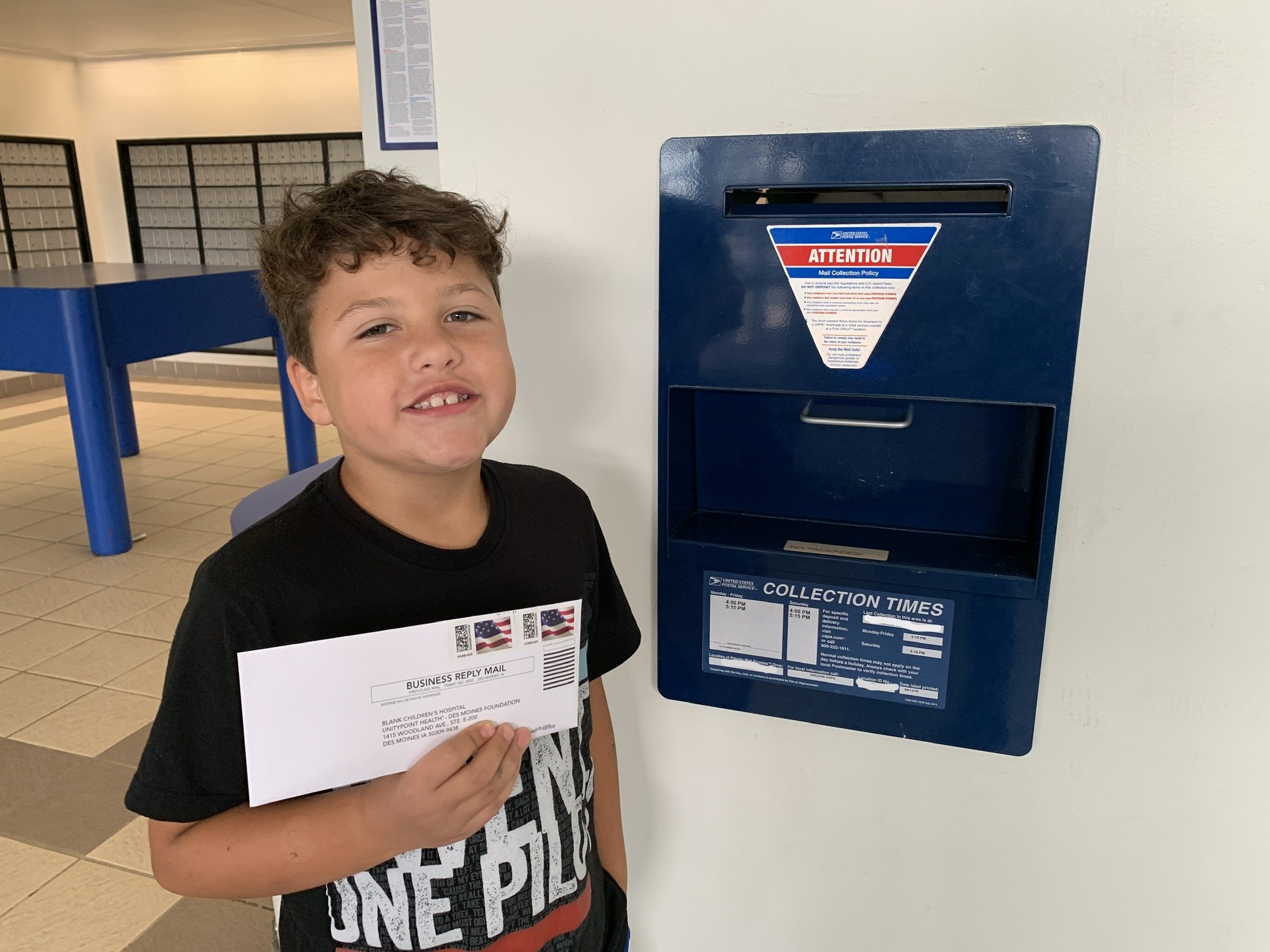
This is where so many of us whiff. Whether it's ourselves or in our parenting, we don't close loops with finances. We take shortcuts, stop short of fully completing goals, or inadvertently rob ourselves (and our kids) of the tangibility. When we do this, we lose something important. We lose the meaning, fulfillment, and humanity of the journey.
I wanted Finn to see, feel, and experience every step of this little journey. Once that loop was closed, it triggered so many questions:
"Do you think my gift will make a difference?"
"Can I give to the hospital again?"
"Can I give to other people, too?"
"Do you think God is happy with my decision?"
"If I work more, will I have more money to do things with?"
"Is it okay to save and give more of my money next time I get paid?"
"When can I get a job?"
His little mind is working overtime. This is the beauty of closing loops. Make a goal. Work toward the goal. Accomplish the goal. Celebrate the win. Start afresh. Life can be a series of awesome loops if we allow it.
I'm sure Finn will screw up many, many times. He'll do selfish things. He'll make mistakes. He'll hurt people. But yesterday, he took a step in a positive direction. He grew, and I probably did as well.
Create new loops, enjoy the journey, close them, and repeat.
____
Did someone forward you this post? We're glad you're here! If you'd like to subscribe to The Daily Meaning to receive these posts directly in your inbox (for free!), just CLICK THIS LINK. It only takes 10 seconds.

Heartbreak. Joy. Impact.
What makes you angry? What breaks your heart? What makes you sad? What puts a knot in your stomach? What gets you fired up?These are some of the questions I ask people when they are interested in giving, but don't know where to start.
What makes you angry? What breaks your heart? What makes you sad? What puts a knot in your stomach? What gets you fired up?
These are some of the questions I ask people when they are interested in giving, but don't know where to start. One of my biggest principles in cultivating generosity is making gifts we can emotionally connect to. This is an overlooked aspect of people's giving, which I believe can change everything. Once we connect our giving with our emotions and passions, it unlocks a gear we never knew we had.
I'm writing about this today because something transpired under my roof this weekend. On Saturday afternoon, Finn decided he was going to get the mail. Then, something caught his eye. "Dad, you got something from the children's hospital. It must be a bill." I explained it's probably not a bill, but rather the hospital asking for help. That sparked his interest, so without further ado, he tore open the envelope. He spent the next hour reading, inspecting, and re-reading the documents. He was fixated on this letter. It talked about caring for kids and making sure their families are taken care of.
Fast forward a few hours later, and we were on the couch watching the annual CyHawk football game featuring our Iowa State Cyclones vs. the Iowa Hawkeyes. As much as I don't like the Hawkeyes (sorry, Hawk friends!), they have one of the most beautiful traditions in all of sports. After the conclusion of the first quarter, every person in the stadium - fans, players on both sides, refs, coaches, stadium employees - stop everything, turn their attention to the next-door children's hospital towering above, and wave at all the kids and families in the windows. It's a special moment each and every time. I turn into a puddle just writing about it, and I suspect you'll be the same if you watch this ESPN story.
As the wave began, both my kids were curious about what was happening. Finn especially took an interest in this. The cameras zoomed in on the kids at the windows, wildly waving at the stadium crowd with huge smiles on their faces. Some kids were bald from their treatment regimen, while others were in beds. Finn looked at the kids on the TV, then down to the pictures of kids in the hospital letter he had been reading.
Something clicked inside him. He looked sad, almost introspective. Then, without a word, he walked out of the living room toward his bedroom. He returned a few seconds later with a baggie of cash. "Dad, can I send my giving money to the kids' hospital?"
"You bet, bud. We absolutely can." We filled out the giving form, he delicately placed his $16 into the provided return envelope, and he wrote them a note explaining his gift. He had so much joy doing this. Later today, I'll drive him to the post office so he can personally drop the envelope in the mailbox.
Heartbreak. Joy. Impact. Finn is starting to get it.
____
Did someone forward you this post? We're glad you're here! If you'd like to subscribe to The Daily Meaning to receive these posts directly in your inbox (for free!), just CLICK THIS LINK. It only takes 10 seconds.
Encountering the Fork
This is a test, a turning point, a fork in the road. If he ultimately chooses to walk away from something because it's difficult, that could easily become his mode of operation. If something gets hard, quit. If the next thing gets hard, quit.
We have an emergency brewing in our house. In a sudden and unexpected meltdown, Pax confessed that he wants to quit playing the drums. Yes, the same kid who put on this performance just 90 days after picking up drumsticks for the first time.
When I pressed him on the subject, he said he desires to switch to the electric guitar. Not wanting to project my desires on him, I started asking questions to learn more. I still don't have the full story, but in short, his desire to quit the drums stems from frustration from it "being hard."
Uh oh, we have a problem. I'm not concerned about my kids losing interest in a particular activity. After all, as a parent, I can't live my life through them and project my own desires upon their steps. They need to make their own decisions. However, the reason for his desired decision is what concerns me.
This is a test, a turning point, a fork in the road. If he ultimately chooses to walk away from something because it's difficult, that could easily become his mode of operation. If something gets hard, quit. If the next thing gets hard, quit.
Each of us faces these types of tests throughout our journey. We start to gain some success in xyz endeavor, but then BOOM (!!), we hit an obstacle. That's the fork in the road. It's easy to keep moving forward when things are going well. What reveals our true character is how we respond when we hit that fork in the road.
So many of my clients have hit forks in the last few months. Whether they are getting out of debt, trying to hit the next level in their business, trying to lock in their budget, working toward a promotion, or attempting to ramp up their investing/savings game. My job isn't to merely cheer them on, but rather to prepare them for when (not if) the fork comes. The fork always comes. It's inevitable. When those forks hit, their next few steps will be critical.
As I reflect on my journey, I'm so grateful for the times younger me pushed through these obstacles. Who I am and where I'm at is a direct result of those decisions. On the flip side, I have many regrets from times when I didn't push through. Like Pax, I wanted to quit.....and I did. I so badly wish I could get a do-over on some of those decisions.
Only time will tell if Pax will persevere. If he does, it will build a ton of character and be a tell for what might come. If he doesn't, well, that could be a different kind of tell. I'll be praying for him, providing guidance, and encouraging him every step of the way. Please pray for me, too!
It's easy to talk to the talk, but some of us adults need to walk the walk. Our kids are watching. If we quit, why shouldn't they? Let's show them what to do with these forks!
Why Must You Taunt Me, Apple?
As I attempted to write today's post, my phone oddly and repeatedly reminded me of past photos. Hey look, Travis, it's a cute picture of Pax eating ice cream when he was 3! Travis, check out this handsome little 2-year-old Finny riding a boat. It was almost as if Apple and Father Time were teaming up to taunt me.
As I attempted to write today's post, my phone oddly and repeatedly reminded me of past photos. Hey look, Travis, it's a cute picture of Pax eating ice cream when he was 3! Travis, check out this handsome little 2-year-old Finny riding a boat. It was almost as if Apple and Father Time were teaming up to taunt me.
Early in my parenting journey, someone said something that I didn't quite understand: "The days are long, but the years are short." It made zero sense to me. Fast-forward eight years, and no truer phrase has ever been spoken.
As we're on our annual family vacation in Okoboji, these days with the boys can seem painfully long (especially when they antagonize each other). We're having a blast, but it can just get long at times. On the flip side, how is it already our fifth year on this trip?!?!
They were babies last week. They were toddlers yesterday. Now, we're heading into second grade. As I'm sitting here lamenting how fast time is flying by, I'm simultaneously grateful for creating a life that allows us plenty of family time. My work is crazy, the hours can be long, and it often involves me zig-zagging across the country, but we've intentionally curated this life. Strong-ish boundaries, clear expectations, a partially well-thought-out plan, and a firm understanding of our why.
We've made so many sacrifices in the name of prioritizing our family. We've downsized our house, threw away status, detonated any chance of an early retirement (which makes my heart happy), trashed a boujee lifestyle, and literally turned our backs on millions of dollars.
There are months when I wonder what in the heck we did to ourselves. The months when there's barely enough income to account for our needs and giving. The months that feel extra stressful. The months when I wonder what life would be like if I hadn't taken a weird detour five years ago.
But then, like today, Apple decides I need to get some cute and harsh reminders of how fast time flies by spamming me with old photos. Oh yeah (!!), that's why we do what we do.
The days are long, but the years are short. In due time, I'll be an old man reflecting on my life. There will inevitably be many regrets circling my thoughts. However, I guarantee choosing meaning over money will NOT be one of them. Money, stuff, and status are fleeting. Legacy is forever.
No Paybacks
On a recent trip to KC, Sarah and the boys visited the Truman Library. Pax wanted to purchase a souvenir, but he didn't have his money with him. Sarah, knowing he had at least that much money in his wallet at home, agreed to buy it for him and we would take the money out of his wallet when they returned home (i.e. pay it back). That's what happened, buyer’s remorse set in, and that's what ultimately led to the meltdown.
I had a beautiful idea for today's post. I even gave my friends Chi-Chung and John a sneak peek of the concept as I was bursting with excitement. However, plans changed after WW3 nearly broke out in my house last night.
I'll set the table for you. With our annual family vacation approaching, I reminded the kids that they could do some extra house projects to earn spending money for the trip. Pax was on the fence, so I reminded him that he only had $2 in his wallet. This is when the freak-out happened. He believed he had more money than that, and accused us of taking it from him. It's definitely true......or, more accurately, a half-truth.
On a recent trip to KC, Sarah and the boys visited the Truman Library. Pax wanted to purchase a souvenir, but he didn't have his money with him. Sarah, knowing he had at least that much money in his wallet at home, agreed to buy it for him and we would take the money out of his wallet when they returned home (i.e. pay it back). That's what happened, buyer’s remorse set in, and that's what ultimately led to the meltdown.
This was a big mistake on Sarah's part. We have a no payback rule in our house. If they don't have the money on hand to buy something, they don't buy it—no exceptions. In that particular situation, Sarah knew he had the money, so "what's the harm in just having him pay it back?" It feels like six of one, half a dozen of another. Isn't it the same thing? Far from it!
When we pay for something the moment we purchase it, there's a psychological connection between the money and the item. In that moment, Pax would have held the $5 in one hand and the souvenir in the other, then made a choice. Science shows that this moment triggers the pain center in our brain, causing an instant and noticeable psychological response. No such moment occurs when we purchase things without actually paying for it. Cheating ourselves of this moment drives buyer's remorse and taints the value of money in our psyche.
We eventually resolved the situation, and Sarah, seeing the potential destructiveness of breaking the link between the money and the purchase, made a renewed commitment to never again break this rule. If you don't have the money, you don't buy it. No exceptions.
If you haven't caught on yet, I'm going somewhere else with this. We adults are masters of subverting this principle. It's called a credit card. We buy something with the full intent of paying it back soon, and we totally have the money to pay it back, but it's easier to just swipe that card and deal with it later. Doing so shortcircuits the psychological impact of actually having to pay for something. No pain center triggers. No moment of consideration. And ultimately, probably some buyer's remorse.
Following the no payback rule helps kids develop a stronger and healthier relationship with money. It does for adults, too.
____
Did someone forward you this post? We're glad you're here! If you'd like to subscribe to The Daily Meaning to receive these posts directly in your inbox (for free!), just CLICK THIS LINK. It only takes 10 seconds.
Period.
As we were on our way to the science center yesterday, my family enjoyed a quick lunch at a downtown patio. Toward the end of our meal, a young woman approached us, looking distressed. "I'm sorry, and I'm really embarrassed to even ask, but I could really use some help. Do you have a few dollars you could give me?”
As we were on our way to the science center yesterday, my family enjoyed a quick lunch at a downtown patio. Toward the end of our meal, a young woman approached us, looking distressed. "I'm sorry, and I'm really embarrassed to even ask, but I could really use some help. Do you have a few dollars you could give me?"
I quickly grabbed my wallet to see what I had. Not surprisingly, my cash was limited. I only had a single twenty-dollar bill on me. I pulled the bill out, handed it to her, and wished her a good day. She was shocked by the gift, thanked me multiple times, and then continued on her way.
This sparked a fun conversation with the kids. What was she going to do with the money? Did she really need it? Why did she need it? I answered every question with "I don't know." Then, after I unsuccessfully answered all their questions, I finished with this: "Our job is to be loving and generous.....period. That's what God asks us to do. What she does with that money is between her and God."
I can already see the criticism for this approach. Did she even need the money? Was she scamming me? Was she going to use it for something irresponsible? What if I just wasted that money?!?! I could easily have a cynical perspective like that. Part of me does if I'm being honest. However, my job is to be loving and generous.....period. It reminds me of one of my favorite stories I've shockingly only shared once before on this blog:
C.S. Lewis and his friend were walking down the street. Along the path, they see a homeless man. Lewis immediately reached into his pockets, pulled out all the cash he had on him, and handed it to the man. As they walked away, his friend said, "You shouldn't have done that. He's just going to squander it on tobacco and alcohol." Mr. Lewis looks at his friend and replies, "Well, that's what I was going to do with it."
We need to be less cynical and more loving.
We need to be less judgy and more generous.
Yes, we're going to make mistakes. Yes, our gifts may sometimes be squandered. Yes, we'll get taken advantage of.
But our call is to be loving and generous.....period.
____
Did someone forward you this post? We're glad you're here! If you'd like to subscribe to The Daily Meaning to receive these posts directly in your inbox (for free!), just CLICK THIS LINK. It only takes 10 seconds.
I Won't Be Stealing His Blessing
As he divided up the money into three components (spending, saving, and giving), he turned to me and said, "Dad, I'm going to use my giving money to buy you a new battery so you can fix your watch." I've been wearing a broken watch for a few months now. I have other watches, but this one is my favorite. Unfortunately, though, the battery died. So, at this point, it's for aesthetics only.
Finn finished the rest of how mowing duties last night. I feel weird saying that about a seven-year-old, but here we are. He loves mowing, and I'm more than happy to let him do it. It's also a great opportunity for me to teach him about the connection between hard work and money. After we came into the house, with sweat dripping off his face, he was eager to receive the rest of his pay.
As he divided up the money into three components (spending, saving, and giving), he turned to me and said, "Dad, I'm going to use my giving money to buy you a new battery so you can fix your watch." I've been wearing a broken watch for a few months now. I have other watches, but this one is my favorite. Unfortunately, though, the battery died. So, at this point, it's for aesthetics only.
I was blown away by his thoughtful generosity. Sarah was also moved by his gesture and said, "Finny, that is so thoughtful of you! Very sweet. But Dad can use other money to fix his watch."
The moment came and went. Finn seemed excited about his idea, and we quickly moved on to the next part of our evening. Sarah and I didn't discuss this after the fact, but I wasn't a fan of her comment. She meant well, and her intent was pure, but she inadvertently stole (or attempted to steal) his blessing.
See, Finn didn't want to buy me a new battery because I NEEDED it. Rather, he wanted to show love through generosity.....period. I need to accept this gift. Robbing people of their blessing is an act of anti-generosity. It's counter to everything we try to teach.
It reminds me of a recent text message I received: "What's your Venmo?" I kind of knew what was coming, but then again, I really didn't. But I had a suspicion about what it could be about. I didn't ask this person for money. I didn't want this person to send me money. I didn't feel like I deserved any money. However, I don't steal people's blessings. My personal rule is to NEVER steal someone's attempt to practice generosity. I gratefully shared my Venmo handle, only to receive a gift mere minutes later. I excitedly and sincerely thanked this person for the gesture. It means a lot that they would do that, even if I didn't NEED it. It was an act of thoughtful love. I wasn't about to rob that from them.
Back to Finn. Yes, I'm going to let him fix my watch. The only way to become generous is to practice generosity. If I'm trying to raise my kids to become loving, generous men, why would I rob them of opportunities to be generous? I won't. I will gratefully receive Finn's thoughtful act of generosity. I hope it adds yet another spark to his generosity journey.
____
Did someone forward you this post? We're glad you're here! If you'd like to subscribe to The Daily Meaning to receive these posts directly in your inbox (for free!), just CLICK THIS LINK. It only takes 10 seconds.
Remorse is Setting In
As they each opened their wallets to deposit their spending cash, they were welcomed to an empty cavern where money used to live. They were immediately upset at the idea of having no spending money (except for the cash they just earned). Sarah reminded them that they spent all their money on the 4th of July. I could see disappointment and buyer's remorse take over their expressions.
We had a rough moment in our house last night. Both boys mowed the yard, resulting in a little paycheck. As always, 1/3 goes to their giving ziplock, 1/3 goes to their savings ziplock, and 1/3 goes into their wallets for spending. They were eager to receive the fruits of their labor, but reality quickly struck.
As they each opened their wallets to deposit their spending cash, they were welcomed to an empty cavern where money used to live. They were immediately upset at the idea of having no spending money (except for the cash they just earned). Sarah reminded them that they spent all their money on the 4th of July. I could see disappointment and buyer's remorse take over their expressions.
If I'm being honest, I loved it. I'm so glad this happened! They need to feel this way. It's imperative they learn these lessons the hard way. It's critical they understand the importance of wise decision-making. It's a growth opportunity to experience the regret of past decisions at the expense of future opportunities. They were mad at us, but at the heart of it, they were mad at their past decisions.
As parents, we must subject our children to these types of painful situations. It's not hurting them; it's helping them. Allowing them to fail and experience consequences is an exercise of love. It takes nearly zero effort to give our kids whatever they want. That's the easy way out. The difficult path, however, is having the fortitude and confidence to allow our kids to fail when we have the power to rescue them.
There will be more work. There will be more money. There will be more fun purchases. Next time, though, perhaps they will approach their decisions with a bit more wisdom. 7-year-old wisdom, but wisdom nonetheless. That's the win!
Let the kids fail. Let them feel pain. Let them learn the hard way. That's the gateway to growth, wisdom, and a brighter, healthier future.
____
Did someone forward you this post? We're glad you're here! If you'd like to subscribe to The Daily Meaning to receive these posts directly in your inbox (for free!), just CLICK THIS LINK. It only takes 10 seconds.
Cultivating the Next Generation of Stewards
One of the main questions I get asked about is how to teach kids about money. Most parents don't actually teach kids about money, and the ones who do typically do so in the most toxic of ways. I don't usually say anything when I see terrible teaching play out because, well, they didn't ask for my opinion. But since I have a platform, today I'll be sharing the way I recommend teaching it. First, I'll share a few key principles that I believe are essential:
One of the main questions I get asked about is how to teach kids about money. Most parents don't actually teach kids about money, and the ones who do typically do so in unhealthy ways. So, today I'll be sharing the way I recommend teaching it. First, I'll share a few key principles that I believe are essential:
There are only three things we can do with money: spend, save, and give. All are equally important.
Don’t give an allowance. Allowances teach kids entitlement. Instead, kids should be expected to do basic chores because that's what we do in our family: We serve each other and contribute.
Aside from the normal chores, offer special projects that allow kids to take initiative, do good work, and be compensated for said work. This practice helps connect work, money, and the value of a dollar.
It's critical to let our kids fail. They are either going to fail under our roof where we can help them navigate it, or we can protect them for 18 years, just for them to fail bigger (and without our presence) when they are adults. I repeatedly allow my kids to experience buyer's remorse, regret, and lack of resources to buy things. These are fantastic (and critical lessons) for our kids to learn.
If you're a Christian, it's important to teach kids that money is not ours to begin with. Rather, it's His, and our job is to manage it well.
I typically view this kids-and-money topic as three stages:
Stage 1 - Age 2-6: During this stage, we're just trying to teach kids what money is and how it works. This is typically done through spending and giving. We can bless others through generosity, and we can use it to buy toys. I split the money 50/50 between the two categories. It's done very simply and at a higher level. Piggy banks are usually the tool of choice.
Stage 2 - Age 7-11: During this stage, we're trying to connect the dots between work and money by allowing the kids the opportunity to work in exchange for compensation. This is also the stage where saving for a larger purchase is introduced (delayed gratification!). Whenever I pay the kids for projects, I do so in multiples of three: $3, $6, $9, $12, $15, etc. That way, the kids can allocate 33% for spending, 33% for saving (on a larger item they select), and 33% for giving. My kids use wallets for spending, and separate zip-lock bags for saving and giving.
Stage 3 - Age 12+: During this stage, we teach kids about banking. We use the same principles as above, but at this level, we introduce checking and savings accounts. This is also the stage where they will probably seek outside work opportunities.
There’s definitely more to unpack in the future, but hopefully, this quick summary helps! I know a lot of you are trying to work through these dynamics. You got this, parents!
Leading Kids to (Financial) Hoarding
Do you see a theme? Guilt and shame. Not intentionally, usually. Slowly but surely, we're chipping away at their hearts for spending and generosity. We're trying to help them be "responsible" with money, but what we're really doing is grooming our kids to financially hoard. Get more. Have more. Build wealth. Become "independent.”
"You don't need that."
"Don't waste your money on that thing."
"You shouldn't be giving away so much."
"You need to save better."
"You shouldn't spend on that."
"You need that money more than they do."
These are the comments we make to our kids. Do you see a theme? Guilt and shame. Not intentionally, usually. Slowly but surely, we're chipping away at their hearts for spending and generosity. We're trying to help them be "responsible" with money, but what we're really doing is raising our kids to financially hoard. Get more. Have more. Build wealth. Become "independent."
If I had a nickel for every time a parent approached me and said, "My kid is so good with money. He/she doesn't spend anything. He/she saves everything."......well, I'd have a lot of nickels! See the narrative? Saving is responsible. Saving is THE win. If that's true, anything other than saving is irresponsible.
After twenty years of this narrative repeated over and over, we've created a generation of hoarders.
Like the family that makes $320,000 per year but "can only afford" to give $300/month.
Like the family with $1M in their checking account (yes, checking) that fears having nothing tomorrow.
Like the 60-year-old couple with $7M in their retirement accounts and two jobs they despise, but worry whether they can take care of themselves now and in the future.
Like the young single lady who makes $150,000 per year, but can't emotionally get over the hump to buy herself a pair of jeans.
Like the teenager who works a bunch of hours at his job, but declines invites from his friends to go out to eat on a Friday night, citing he "shouldn't waste money like that."
Like the family who saves $6,000 per month into retirement, but isn't yet able to give. However, once they have $x saved, they will be comfortable enough to start giving.
We parents have groomed our kids to become hoarders through guilt and shame. “Guilt” and “shame,” the two primary feelings expressed by countless adults when discussing their relationship with money. They feel guilt. They feel shame. Then, immediately after using those magic words, they share the comments made to them over the years (especially during their formative kid years). Ouch!
I have good news, though! No, we can't erase our past mistakes (unless you have a Delorean I can borrow!), but we can create a new narrative beginning today. Whatever your kids' age, even if they are adults, it's not too late to begin talking about money through a different lens.
While Sarah and I haven't gotten it all right with our kids, here are the narratives playing under our roof:
We can never be too generous....it's not ours to begin with
Spend money on fun things
Use discipline to save for bigger purchases
Work hard
I hope my kids are irresponsibly generous. I hope they buy fun things and sometimes experience buyer's remorse (it's a good, tough lesson). I hope they show discipline in saving. I hope they develop a strong work ethic. But I pray they don't turn into hoarders.
Our kids deserve better, and we parents have the power to give it to them. You got this!
Suffer Now or Suffer (More) Later
Can we be honest? It's hard to watch our kids learn hard lessons. To watch them suffer, hurt, and face the consequences of their actions. We love our kids, and our instinct is to protect them from pain. With that said, we have two options: watch them suffer when they are young (when we're there to help them navigate and grow), or watch them suffer in adulthood (when the stakes are higher, the consequences steeper, and we're not there to save them).
The majority of how we adults view, perceive, and handle money originated in our childhoods. Whether we like it or not, we are a product of how we were raised. I see how this dynamic has played out in my life, and I've watched it play out in hundreds of people's lives I've had the honor of walking alongside.
Can we be honest? It's hard to watch our kids learn hard lessons. To watch them suffer, hurt, and face the consequences of their actions. We love our kids, and our instinct is to protect them from pain. With that said, we have two options: watch them suffer when they are young (when we're there to help them navigate and grow), or watch them suffer in adulthood (when the stakes are higher, the consequences steeper, and we're not there to save them).
We had one such lesson yesterday. While walking around a shopping center in Branson, MO, Pax found something he really, really, really, really(!!) wanted to buy. However, he didn't have enough money to buy it. This consequence hurt him deeply. He didn't understand why we couldn't just buy it for him, and he felt it was unfair he didn't have enough money. He was livid.
Why didn't he have enough money?
First, he spent other money on things he probably shouldn't have purchased. We try to guide him on some of his purchasing decisions, but ultimately, we must let him fail in this way as well. It's important to get a taste of buyer's remorse when you're young. Kids need to learn about opportunity cost. We can't have everything. For every dollar we spend on one thing, it's one less dollar we have to spend on something else. We need to allow our kids to feel that tension and be forced to make those decisions.
Second, he had less money in the first place. He could have had much more resources, but he repeatedly turned down opportunities to earn. Projects around the house, side jobs, etc. In the moment, not working seemed like a better decision than working......until he realized he needed the money. He immediately regretted not working as much.
Those two factors culminated in a perfect moment of pain for Pax yesterday. He faced the harsh reality that he couldn't afford the one thing he really wanted. It was a fantastic hard lesson, and I was there to console and coach him through it. A few hours later, after he had a chance to think about it, he told me he should probably do more work and asked if I thought he could make enough money to buy this toy soon. "Yeah, bud. We can absolutely make that happen."
This is life. Our kids will face these same challenges for decades, except the stakes will get steeper every step of the way. Whatever their ages, help them learn hard lessons while the consequences are smaller and you're there to walk alongside them. These are some of the best gifts you'll ever give them.
Seeing It (Again) Through Their Eyes
Yesterday, our family embarked on our first post-school summer trip: Chicago! Having grown up not far west of Chicago, it's a city I've been to countless times. Though I love it, it doesn't have a "new" feeling anymore. However, it's Finn and Pax's first-ever time in Chicago, and it's been a real treat so far. Sensory overload at its finest. We grabbed some Chicago-style pizza, hit a massive candy store, and walked alongside Michigan Avenue and the river. Not too shabby for our first few hours in the city.
There's something different about being present for other people's first-time experiences, especially kids. It's almost like we get to experience it for the first time again. I felt like a little kid showing off my favorite toy. It was pure joy to show the boys a city that's been part of my life for as long as I can remember.
We're staying downtown, making a pilgrimage to Wrigley, catching a Blue Man Group show, scoping out The Bean, and spending some time at the Museum of Science and Industry. We'll have Italian Beefs, hot dogs, and probably enough ice cream to make President Biden blush. It won't be an inexpensive trip, but man, we'll be investing in memories.
I've had many profoundly memorable experiences throughout my life. Seeing the Great Wall, exploring the Mongolian wilderness, wandering the streets of Hong Kong, country-hopping the Middle East, and adventuring through Europe. All of these memories are special to me. But there's nothing more special than experiencing something through another's eyes. It's the power of community and shared experiences. It's the bonding that happens. An unspeakable connection that we know will last a lifetime.
Investing in memories is an amazing endeavor, but doing it alongside people we care about ratchets it up to a whole new level. I made my first trip to Wrigley when I was seven years old, then proceeded to visit it at least one time per year for the next 20 years. It holds a special place in my heart. Tonight, I get to take my own seven-year-olds to their first game at Wrigley. I can't wait to invest in those memories and watch the game through their eyes. It may be my 100th trip to Wrigley, but it might as well be my first.
Juicing Meaning With Tradition
Today’s post is brought to you from a tent in the middle of nowhere, hacked out on my phone. I’m on a camping trip with the boys, and we are having a blast.
As I always say, we need to invest in memories. Memories are the one thing we can buy that won’t one day end up in a landfill. Memories are forever. Memories bond us. Memories are intertwined with meaning.
There is one way to juice up memories, though: when they are shrouded in tradition. This camping trip, for example, is a Shelton family tradition. It’s the fifth consecutive year we’ve done it, beginning when the boys were just three. We anticipate it each year. The boys talk about it the months leading up to it. They share stories of past trips and plan all the activities they want to do on the upcoming trip. Just last night, we rode horses, shot BB guns, ate too much food (including s’mores, of course), and played soccer. It was a blast.
Camping trips are always fun, but traditional camping trips are juiced up. There’s something extra special about them. I hope one day my kids tell their kids stories about this tradition. Heck, maybe they will even be inspired to create their own traditions when they become parents.
Here’s the thing about traditions. They don’t need to be elaborate, expensive, or over the top. We have take-out pizza and watch a movie every Friday night. That’s a pretty simple one, but it’s impactful. It becomes part of our family’s rhythm. It creates anticipation and excitement. It juices the memories.
As my kids get older, it’s fun to let them help craft the traditions. They have ownership. They have creative liberties. Through it all, it’s about investing in memories, and perhaps juicing them up.
Traditions + Memories = Extra Meaning
What are some of your family’s traditions?
Finny’s Accidental Seed
After school yesterday, the boys and I decided to play basketball at a nearby park. As we stepped outside, a young man (maybe 12 or 13 years old) walked past our house. He was pushing a lawnmower with a weedeater perched atop. I greeted him and asked what he was up to. He pointed to my neighbor's house and said he was about to finish mowing it. This sparked me to ask a handful of questions about his little business. I loved his heart and desire to create a business.
The conversation concluded with me asking if he wanted to mow my yard. He shared his pricing and told me he could mow it immediately if I wanted. I pulled out some cash, handed it to him, and he immediately got to work. At that moment, I turned my attention back to the kids, and we resumed our walk to the park. That's when an unexpected conversation occurred:
Finn: "Did you just pay that kid money to mow our yard?"
Me: "Yeah, man! I was going to mow it this weekend, but now I can spend more time with you guys, instead."
Finn: "You mean he gets to play with a mower AND get paid money?"
Me: "Yeah! He's helping us, so he gets to earn money for doing it."
Finn: "Dad, can I mow people's yards and get paid money when I'm his age?"
Me: "Yeah, bud! That sounds awesome. There are a lot of ways we can help people, and mowing is one of them. I'd love to help you get started if that's what you want to do."
Finn: "Can we buy me my own mower this weekend so I can start practicing?"
Me: "......."
I could see Finn's wheels turning. He was inspired, encouraged, and extremely excited. A whole new world of possibilities opened up in that moment. Truth is, I wasn't intending for my interaction with the young "mowin' man" to be a seed-planting endeavor. And I know the young mower didn't, either. Despite that, an accidental seed was planted with little Finny. Perhaps that seed will die......or maybe it will grow into something beautiful. I don't know which way it will go, but I'm excited to find out in due time.
To be honest, I don't even know what the takeaway should be for today's post. I just found the story surprising and uplifting, and thought maybe there's a nugget in there that can add value to your day. I love that young mower's heart and work ethic. I love Finn's curiosity and internalization of ideas. I love the fact I can spend a few bucks to free up more time with my boys this weekend. I love all of it.
I hope you have a wonderful day. Keep planting those seeds.....the intentional ones, and the accidental ones.
Small, Tiny, Unexpected, Amazing Wins
Parents, do you ever wonder if all your hard work is paying off? Seriously, it usually seems like our words are in one ear, out the other. Are they even listening? Are they even watching? Is it moving the needle? Am I completely screwing them up without even realizing it?
Then, out of the blue, when you need it most, you get the tiniest but most amazing win.
That happened to us yesterday. We were in the middle of a tough stretch. Finn didn't want to get dressed for church, and Pax stormed out of the room after I beat him at checkers. It was a mess. Pax recovered quickly, but Finn was spiraling.
Sensing this situation was heading in a bad direction, Pax took matters into his own hands. He walked into his bedroom, grabbed his wallet, and returned to the living room where Finn was melting down. I didn't know what he was doing, so I just kept my mouth shut and watched as a curious third party.
"Finn, I'll buy you a donut at church today," he said, reaching into his wallet to find a $1 bill. Finn wasn't in an emotional place to receive the gift, but I was so proud of Pax!
Pax is starting to understand the purpose of money. He's figured out that it's best used (and more fun) to make a difference in others. This isn't the first time I've seen this behavior from him, and I hope it won't be the last.
Money isn't easy to come by for a 7-year-old, so it's pretty sweet to see him proactively and excitedly try to use it to bless his twin brother (who was treating him poorly, by the way). I won't say he "gets it," but he's showing signs of starting to get it. As his parent, I'm definitely going to encourage the heck out of him. The seeds have been planted, and now we water.
Parents, keep your eyes open for the small, tiny, unexpected, amazing wins. We need them. Sometimes, that's the one thing that gives us enough energy to keep going. Small wins are still wins, and small wins will eventually turn into big wins. Keep watering!
“Daddy, When Does the New Month Start?”
I received at least a dozen messages about yesterday's post. Specifically, people were curious how we have open financial conversations with our kids (at age-appropriate levels) while avoiding them feeling the weight of it.
It reminds me of a recent interaction in my house. As I was working on something, Finn approached me with a question. "Daddy, when does the new month start?" "In about a week, bud. Why?" "I want to go to Chuck-E-Cheese to play games. Can we put it in the budget next month?"
I loved his heart in the question. There's something important to him. He recognizes it costs money. He also knows we handle our finances with intentionality. Therefore, he asked if we could prioritize it in the budget.
My response to him? "Of course we can, bud. But we might actually still have money left in the kids category this month. If we do, we should totally go to Chuck-E-Cheese today." I opened the budgeting app and we looked at how much was left. $75! He celebrated wildly, and then a few hours later, we shared laughs over Chuck-E-Cheese games." Side note: Did you know they recently got rid of their creepy animatronic band? I was so mad. Despite being terrifying, that dysfunctional band was a fun remnant of my childhood.
The narrative of our family's money conversations is intentional. We never use the phrase "We can't afford it." Those four words are the ultimate parenting shut-down. It wins the conversation every time. However, it also confuses our kids. For example, if our kid asks for a $30 Lego set and we respond with "We can't afford it," the child may think we literally don't have $30. It also leads them to believe that if we did have $30, we would 100% buy it. It's a weird narrative for kids to wrestle. All the while, we parents are oblivious to how these comments impact them.
Instead, we should talk about money through the lens of intentionality and prioritization. If our kids want something we aren't willing to buy right now, Sarah and I respond that "it's not in the budget this month." We CAN afford it, but it's not part of the plan right now. From there, we can choose not to prioritize it, or discuss adding it to a future budget. Either way, approaching things from the intentionality angle staves off the "I want it now" syndrome.
When we take this approach with our children, they learn the importance of patience, prioritization, planning, delayed gratification, communication, and responsibility. They also learn it's okay to buy fun things. We don't demonize wants. We don't treat fun purchases as wasteful. It's all part of developing a healthy perspective around spending, saving, and giving. Spending on fun things is important.....but it must be done responsibly. Even a seven-year-old can comprehend this if approached well.
Parents, what say you? I'd love to hear your feedback on this topic and any other ideas for engaging in healthy money conversations with your kids.
Don’t Let the Kids Feel It
We parents, whether intentionally or unintentionally, are placing immense guilt on our children. Kids feel the weight of this burden. They carry it perpetually. "Do you know how much this is costing us?" "Wow, that appointment was expensive." "We're paying a lot of money for you to ____."
Today was (hopefully) the last of a string of dentist appointments for one of our kids. It's been an expensive few months. We're grateful for our medical sinking fund, but it's starting to put some pressure on our monthly budget.
Today's post isn't a sob story about our recent medical costs. Instead, it's about something often associated with expensive times in life. When these situations arise, it's common to discuss them verbally. Communication is good. Conversation is good. Discourse is good. All good.....with one exception. We need to ensure the kids don't feel it.
We parents, whether intentionally or unintentionally, are placing immense guilt on our children. Kids feel the weight of this burden. They carry it perpetually. "Do you know how much this is costing us?" "Wow, that appointment was expensive." "We're paying a lot of money for you to ____."
These single, seemingly innocent comments can have a detrimental effect on our kids. I have clients who share stories about remarks made by their parents 25 years ago, and as a result, they've refused to accept any help or aid from them ever since. These are deep wounds. Kids, turned teens, turned adults who feel like they are a burden to their own parents. Their parents probably haven't even thought twice about their seemingly innocent comment since the moment it left their mouth 25 years ago, yet it's impacting their relationship decades later. That's how powerful the weight of this guilt feels to our kids.
While I will openly discuss finances with my kids (to varying degrees), I will never openly discuss how an activity/expense tied to them impacts us. We need to let our yes be yes, and our no be no. Sports and school activities are a prime example of this. It's common for parents to say yes to something, but then perpetually hold it over their kids' heads. I know parents aren't doing it to be intentionally hurtful. Rather, they do it as an incentive or an act of accountability for the child to follow through. But I also know the damage it's causing to our young people.
Don't share that burden with them. Share it with each other. Share it with a friend. Share it with me. Just don't share it with them. They aren't yet able to process something like that in a healthy way. Let them remain kids. Say no if you need to say no, but please don't say and then hang it over them. Future you will be grateful for this choice when your kids haven't carried that unknown guilt for decades.
You got this, parents! It's not easy, but it's worth it.
The Kids Feel It
There's one statistic that lives rent-free in my head. I've mentioned it multiple times on this blog, in the podcast, and in my keynote talk. According to a Gallup poll, 70% of Americans dislike or hate their job. It's actually higher than 70% since they recommissioned the study post-COVID, but 70% is a nice round number and rolls off the tongue.
There's one statistic that lives rent-free in my head. I've mentioned it multiple times on this blog, in the podcast, and in my keynote talk. According to a Gallup poll, 70% of Americans dislike or hate their job. It's actually higher than 70% since they recommissioned the study post-COVID, but 70% is a nice round number and rolls off the tongue. 7 out of 10 Americans!!! It's bonkers. It's also normalized in our culture. Not only is it ok to perpetually hate our work, but we believe that's how it's supposed to be.
Do you know who doesn't find it acceptable? Our kids. In fact, they profoundly feel the impact of our work. We parents might think our kids are isolated from the realities of our work, but that's a naive notion.
I first became aware of this dynamic when I began my tenure as a youth group leader. Without fail, kids would constantly bring up their parents' work (and rarely in a good way). When this happened, the conversation didn't revolve around how it impacted the parent. Instead, it was about all the ripple effects impairing the family. The parent is always in a bad mood. The parents were stressed and fighting. A parent is always working and doesn't have time for their kids. So many deeply woven implications.
This post, however, was inspired by a different sort of conversation I recently had. I was talking to a seven-year-old. It was a silly, meandering conversation, as often happens with first-graders. Then, this little boy randomly dropped a different sort of comment as his smile vanished. "My mom is really stressed at work. I don't like seeing her like this all the time. I just wish she would get a new job."
I don't know this kid's parents. I've never met them. But the look on his face spoke volumes. A few more comments were solemnly shared about this situation, and then the conversation suddenly shifted back to fart jokes and superheroes.
Parents, our kids deserve better than this. We can try to hide our work reality from our children, but it leaks into every area of life. This makes sense. If we spend half our waking hours living somewhere between mere tolerance and absolute disgust, it inevitably shows through.
There's one other consequence. If 70% of us parents dislike or hate our job, and if it truly does leak into the other areas of life (which our kids see and feel), it creates a generational implication. We are raising our children to believe work is an inherently bad thing, a necessary evil. It's something we have to do, and it sucks. It's supposed to suck. I'm watching this dynamic play out in real-time with youth group kids, former youth group kids, and fellow parents. Our culture is completely polluted by the idea that work is bad. It's a shame.
This piece isn't my condemnation of parents. Rather, it's a rallying cry. Your kids deserve better. But first, you deserve better!
Once a Cheater
My kids enjoy playing at a local trampoline park. When we go, Pax's favorite area is the dodgeball court. Yes, trampoline dodgeball.....it's as fun as you'd think. However, there's always one glaring issue at play: cheaters galore. A kid gets square in the chest, then acts like it never happened. Another kid catches a stray on the leg, and completely ignores it.
My kids enjoy playing at a local trampoline park. When we go, Pax's favorite area is the dodgeball court. Yes, trampoline dodgeball.....it's as fun as you'd think. However, there's always one glaring issue at play: cheaters galore. A kid gets hit square in the chest, then acts like it never happened. Another kid catches a stray on the leg, and completely ignores it. Everyone pretends like it never happened. Then, when other kids start calling people out for their cheating, the lies start flowing out of their mouths. "I hit it with the ball." "It hit the wall first." "Someone caught it."
When I watch these dynamics play out, all I can think about is the saying, "Once a cheater, always a cheater." It isn't absolutely true, but there's certainly some truth to it. Cheating is a slippery slope. It starts out like an innocent game of dodgeball. There are rewards for this level of cheating. You don't have to exit the game and wait for your turn to go back in....and you help your team win. And when someone calls you out as a cheater, you just deny it, and there are really no consequences. So, from an early age, we are taught the pros of cheating outweigh the cons.
Again, it's fairly innocent, and there aren't any significant victims. However, if someone is willing to lie and cheat on something with nothing material at stake, how will they behave when there's something real on the line? Maybe it's that math test. Maybe it's clocking in 15 minutes before a work shift technically starts. Successful cheating breeds more cheating.
Again, these aren't life-altering crimes. Over time, though, we get older, the stakes rise, and we become more confident/comfortable in our cheating ways. Also, as time passes, it doesn’t feel so innocent anymore. Now, there are real victims.
We all know cheaters in our lives. They range somewhere between annoying and revolting. These are the people who cut corners, look for the easy way, find loopholes and technicalities, turn their back on obligations, and betray someone for a few dollars. These types of people often find success at the micro level. They score an opportunity here or a deal there. They benefit where they can. They are transactional. They are always looking for an edge. And they find it….for a while.
However, these types of people usually lose in the long run. People lose trust in them. People tire of their games. They don't have any actual discipline or work ethic to carry them when the cheating behavior stops working.
As parents, we must teach our children the proper way to behave. We need to teach (and more importantly, model) a zero-tolerance approach to cheating. It needs to carry into every area of our life, including the simplest and silliest little games. Doing the right thing is always the right thing, even when it doesn't benefit us.
The slippery slope is indeed slippery. Together, we can help bend the culture in a positive direction….but it starts with our own behavior.