

The Daily Meaning
Take your mornings to the next level with a daily dose of perspective and encouragement to start your day off right. Sign-up for a free, short-form blog delivered to your inbox each morning, 7 days per week. Some days we talk about money, but usually not. We believe you’ll take away something valuable to help you on your journey. Sign up to join the hundreds of people who read Travis’s blog each morning.
Archive
- June 2026
- May 2026
- April 2026
- March 2026
- February 2026
- January 2026
- December 2025
- November 2025
- October 2025
- September 2025
- August 2025
- July 2025
- June 2025
- May 2025
- April 2025
- March 2025
- February 2025
- January 2025
- December 2024
- November 2024
- October 2024
- September 2024
- August 2024
- July 2024
- June 2024
- May 2024
- April 2024
- March 2024
- February 2024
- January 2024
- December 2023
- November 2023
- October 2023
- September 2023
- August 2023
- July 2023
- June 2023
- May 2023
- April 2023
- March 2023
- February 2023
- January 2023
- December 2022
- November 2022
- August 2021
- November 2020
- July 2020
- June 2020
- April 2020
- March 2020
- February 2020
- October 2019
- September 2019
It’s Hard to Overcome Our Structure
Unfortunately, it's hard to overcome our structure. This family had created a really expensivefinancial structure for their household. Based on THEIR choices, more than 70% of their income was already spoken for before it hits their bank account. No amount of trimming or cutbacks can help this family remedy what ails them.
Someone contacted me with a problem. A couple in their mid-40s, two kids. They believed they were being responsible with their money, but it felt nearly impossible to make financial progress. As they put it, they didn't waste money, spend money frivolously, or buy nice things. Yet, they lived month-to-month and had much financial tension in their marriage.
I sat down with them to review their numbers. Here's what I found (shared with their permission):
Combined Take-Home Income: $8,200
Mortgage Payment: $3,600
Car Payments: $1,600
Other Debt Payments: $700
Do you see a problem here? Just their house payment is 43% of their take-home income. The house plus the cars account for 63%. Then, when you tack on the rest of the debt, these three categories account for 72% of their take-home income.
That means they only have $2,300 left for all other needs, wants, giving, and saving. That's not nothing, but wow, it's tight. So when they say they don't waste a bunch of money or spend frivolously, I believe them. There's no money to waste!
Here was their question: "How do we find margin? Where do we cut?"
These are tough situations. Unfortunately, it's hard to overcome our structure. This family had created a really expensivefinancial structure for their household. Based on THEIR choices, more than 70% of their income was already spoken for before it hits their bank account. No amount of trimming or cutbacks can help this family remedy what ails them.
Whether we want to admit it or not, these are OUR choices. The cities we reside in. The residences we choose. The cars we buy. We can cry foul all we want, but at the end of the day, we have choices to make; and these choices will dictate our structure.
Here's what happened. I pointed out that there are very few options to help this family without them significantly altering their structure. They can't cut groceries, utilities, dining out, clothing, entertainment, or any other budget items enough to move the needle. It's hard to overcome our structure! I couldn't let them go home empty-handed, though. Here are the options I floated by them:
Increase their income
Downsize their residence
Sell one or both vehicles (and replace them with cheaper alternatives).
Use some of their assets to pay off their non-car and non-mortgage debt.
Outside of these four levers, very few options exist to help them. Their structure is their structure, and it must be addressed for what it is. It's tough, but reality.
I hope this family takes a hard look in the mirror and decides to take drastic action; only time will tell. I sincerely believe their life will unlock if they are willing to humble themselves and make difficult choices.
The same goes for you....and me. We can trim around the edges all we want, but our financial structure significantly impacts our journey. For some of you, it may be time to alter your structure.
____
Did someone forward you this post? We're glad you're here! If you'd like to subscribe to The Daily Meaning to receive these posts directly in your inbox (for free!), just CLICK THIS LINK. It only takes 10 seconds.
You Don’t Have to Justify Fun
She doesn't need to justify fun, and neither do you! Do you ever find yourself trying to justify a purchase you "don't need?" We play this little mind game with ourselves constantly. At the heart of this toxic practice is guilt. Deeply ingrained, culturally driven, self-deprecating guilt. Therefore, we play mental gymnastics with ourselves in order to remove or lessen the guilt.
I was meeting with a client when this came out of her mouth: "I really want to buy a ____, but I need to find a way to justify it."
Me: "You don't have to justify fun!"
Seriously! She doesn't need to justify fun, and neither do you! Do you ever find yourself trying to justify a purchase you "don't need?" We play this little mind game with ourselves constantly. At the heart of this toxic practice is guilt. Deeply ingrained, culturally driven, self-deprecating guilt. Therefore, we play mental gymnastics with ourselves in order to remove or lessen the guilt.
"I'm really stressed out right now, and I haven't been a good friend to Stacy lately, so it's okay if I buy a plane ticket to fly to San Diego to see her."
"I haven't spent much money lately, and I just had a good sales quarter, so I'm going to treat myself and buy this purse."
"I just lost 10 pounds, so I need to go buy a few new pairs of jeans."
"I don't get to see my friends much, so signing up for fantasy football is an investment in my relationships."
From an early age, many of us are made to feel guilty for spending money on things we don't need. Quit spending. Save. Be responsible. Don't waste your money. That's what many of us hear throughout our childhoods. Then, we eventually become adults and are given the car keys to life, and we're surprised when we struggle to spend money on ourselves without guilt, regret, or mental games?
I have a solution to this problem. If something adds at least as much value to your life as it costs you, buy it. Plan for it, allocate the money for it, buy it, and enjoy. No, don't be irresponsible and blow up your goals or other priorities; this isn't about being reckless. Rather, it's about being financially intentional, honest with yourself, and true to your values.
You want to fly to San Diego to visit your friend? Awesome! Put it in your budget and go.
You want to buy a new purse? Excellent! Make it happen.
You want a new pair of jeans? Great! Hop in the car and drive to the mall.
You want to play fantasy football with your boys? Sounds fun! Enjoy bombing your draft.....again.
We must remove the guilt if we want to have a healthy relationship with money. If we can't, we don't control our money.....our money controls us. And that, my friends, is a sign we've already lost the game.
Be intentional. Set your goals. Aggressively pursue them. Be generous along the way. Save responsibly. Serve others well. Live a meaningful life. Oh yeah, and don't justify fun!
____
Did someone forward you this post? We're glad you're here! If you'd like to subscribe to The Daily Meaning to receive these posts directly in your inbox (for free!), just CLICK THIS LINK. It only takes 10 seconds.
Being Responsibly Irresponsible
On the one hand, I repeatedly beat on the drum of values-based spending, investing in memories, and finding meaning in our finances. Then yesterday, I leaned into this idea that we shouldn't impulsively spend "extra" money that comes into our lives. Instead, we should apply all extra income to wherever we are in our plan. See the possible incongruency here?
As is the case most days, I opened my Daily Meaning e-mail inbox yesterday to find a message from my friend Randy. Randy consistently responds to my blog posts, including words of encouragement, a representative story, additional wisdom, or alternative perspectives. Yesterday's was a bit different. He pointed out that some readers might find yesterday's post (about not impulsively wasting extra money) incongruent with my typical message of using money on "spending for memories and meaning." He didn't personally find it incongruent, but he suspected others would......and he was right. I subsequently received a handful of questions and responses indicating such.
On the one hand, I repeatedly beat on the drum of values-based spending, investing in memories, and finding meaning in our finances. Then yesterday, I leaned into this idea that we shouldn't impulsively spend "extra" money that comes into our lives. Instead, we should apply all extra income to wherever we are in our plan. See the possible incongruency here?
Here's the bridge for this perceived gap: responsibility and intentionality. It all comes down to those two things. If we don't take responsibility for our finances (pay for needs, save for future expenses, and give), our finances get disjointed.....and stressful! Yes, we should use some of our money for fun and memorable things. However, having our financial ducks in a row is a must. If we're behind on rent, can't put food on the table, and the utility companies threaten a shut-off, we probably shouldn't be dumping our money into lots of wants (today). We need to solidify the foundation. Responsibility is critically important!
Second, intentionality. As I often mention, I don't personally care where you choose to allocate your money. People have different values, priorities, passions, and situations. It's inevitable that your "right" is different from my "right." Here's the second part of my slogan. I don't personally care where you choose to allocate your money......as long as it's intentional. It's planned. It's purposeful. It fits within the context of our broader finances. With intentionality comes peace; with impulse comes regret.
Three of my clients recently traveled to Europe for some epic summer trips. Believe me, I've been living vicariously through them all summer!!!! The pictures are beautiful, and I suspect the memories are much sweeter. Each of these trips cost them anywhere between $6,000-$14,000. That's a lot of money, but they put a ton of intentionality into it. Some of these families have been saving this money for years. Month after month after month of saving. Then, the planning. They got the flights, then the hotels, then started filling the days with museums, trains, tours, and restaurant reservations. So much intentionality! By the time the trip arrived, they had zero financial stress and, carried themselves confidently, knowing their overall finances were intact and thriving.
Let's call this living responsibly irresponsible. Do the things other people judge you for. Make them roll their eyes. Let them question your sanity. But behind the scenes, do it with much intentionality and responsibility.
____
Did someone forward you this post? We're glad you're here! If you'd like to subscribe to The Daily Meaning to receive these posts directly in your inbox (for free!), just CLICK THIS LINK. It only takes 10 seconds.
The Verdict Is In
"How's the midlife crisis treating you?" asked my friend Emma as I was getting out of my new (to me) 2006 Nissan 350Z. "It's going fantastic! Thanks for asking," I responded.
"How's the midlife crisis treating you?" asked my friend Emma as I was getting out of my new (to me) 2006 Nissan 350Z. "It's going fantastic! Thanks for asking," I responded. Emma, man! Always busting my chops!
This week marks the five-month mark since pulling the trigger on this car. Oddly enough, until yesterday, Sarah had only spent a grand total of five minutes in it. Then came yesterday. We did a 10-hour road trip to visit some of our closest friends and experience the opening night of Twenty One Pilot's new tour. Sarah and I had a blast. The top was down, the sun was up, the weather was beautiful, and the Twenty One Pilot music was blaring. The only negative is that Sarah can't drive a stick shift, so she gleefully allowed me to drive the entire 10 hours in one sitting (while she endured multiple sun-soaked naps).
The verdict is in. After five months of driving this car and 10 hours cruising across multiple states with Sarah, I can confidently testify that, besides some of our giving, this was the best $9,000 I've spent in my life. I waited 17 years to purchase this car, and it's lived up to every ounce of anticipation I could have ever imagined (and more).
I didn't need this car. There were more "responsible" things to do with $9,000. An investment in the stock market would have yielded a far better financial outcome than buying an 18-year-old car that will only go down in value. There are surely better financial decisions besides buying a fun car.
All of that is true, yet this one was one of the best decisions we've ever made. Why? Because not everything is about money. The amount of memories I've already made with this car is staggering. The boys love hopping in and cruising our town. They know exactly what songs they want to play. They know what ice cream shops to direct me to. They eagerly anticipate one-on-one time with their dad. It's not about money; it's about something much bigger.
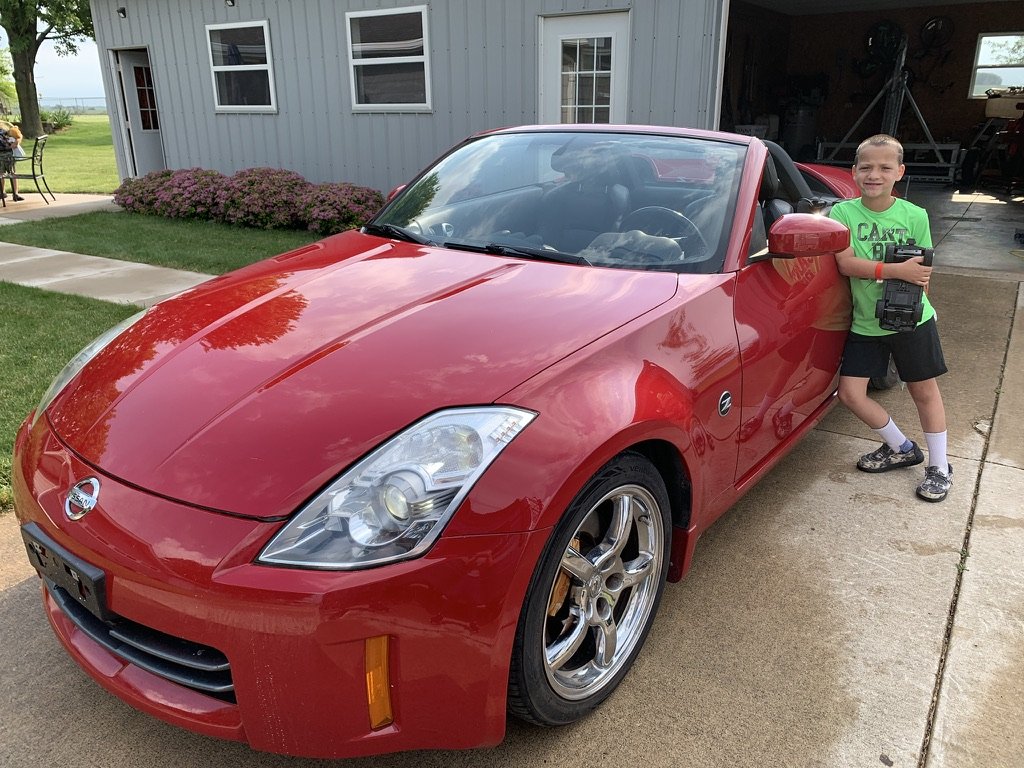
- Pax proudly posing after a fresh wash
No, we don't need money to create memories. Memories are free. However, I'm so glad I chose to spend this $9,000 on this car. After 17 years of waiting, it seems like a fitting and poetic end to the story. Had I purchased it 17 years ago when I was a young single guy, it would have been cool.....but not this cool. Instead, I get to road trip with my wife. I get to have jam sessions with my sons. I get to let friends and youth group kids borrow it. It's so much more than money.
I hope you have your version of this. If you don't, I encourage you to find it. Don't make it about money. Don't obsess about making the right financial move. Make a decision that bends in favor of meaning. Create those memories! You won't regret it.
____
Did someone forward you this post? We're glad you're here! If you'd like to subscribe to The Daily Meaning to receive these posts directly in your inbox (for free!), just CLICK THIS LINK. It only takes 10 seconds.
Remorse is Setting In
As they each opened their wallets to deposit their spending cash, they were welcomed to an empty cavern where money used to live. They were immediately upset at the idea of having no spending money (except for the cash they just earned). Sarah reminded them that they spent all their money on the 4th of July. I could see disappointment and buyer's remorse take over their expressions.
We had a rough moment in our house last night. Both boys mowed the yard, resulting in a little paycheck. As always, 1/3 goes to their giving ziplock, 1/3 goes to their savings ziplock, and 1/3 goes into their wallets for spending. They were eager to receive the fruits of their labor, but reality quickly struck.
As they each opened their wallets to deposit their spending cash, they were welcomed to an empty cavern where money used to live. They were immediately upset at the idea of having no spending money (except for the cash they just earned). Sarah reminded them that they spent all their money on the 4th of July. I could see disappointment and buyer's remorse take over their expressions.
If I'm being honest, I loved it. I'm so glad this happened! They need to feel this way. It's imperative they learn these lessons the hard way. It's critical they understand the importance of wise decision-making. It's a growth opportunity to experience the regret of past decisions at the expense of future opportunities. They were mad at us, but at the heart of it, they were mad at their past decisions.
As parents, we must subject our children to these types of painful situations. It's not hurting them; it's helping them. Allowing them to fail and experience consequences is an exercise of love. It takes nearly zero effort to give our kids whatever they want. That's the easy way out. The difficult path, however, is having the fortitude and confidence to allow our kids to fail when we have the power to rescue them.
There will be more work. There will be more money. There will be more fun purchases. Next time, though, perhaps they will approach their decisions with a bit more wisdom. 7-year-old wisdom, but wisdom nonetheless. That's the win!
Let the kids fail. Let them feel pain. Let them learn the hard way. That's the gateway to growth, wisdom, and a brighter, healthier future.
____
Did someone forward you this post? We're glad you're here! If you'd like to subscribe to The Daily Meaning to receive these posts directly in your inbox (for free!), just CLICK THIS LINK. It only takes 10 seconds.
The Blink of An Eye
A little more than eight years ago, Sarah and I were a mid-30s couple who aspired to one day have children. Just a handful of days later, we were the parents of twin baby boys. We went from “we wish” to “oh crap” in about twelve seconds. We bought car seats, bottles, clothes, and diapers AFTER meeting them for the first time. We didn’t even have a room ready for them. Our lives forever changed in the blink of an eye.
A little more than eight years ago, Sarah and I were a mid-30s couple who aspired to one day have children. Just a handful of days later, we were the parents of twin baby boys. We went from “we wish” to “oh crap” in about twelve seconds. We bought car seats, bottles, clothes, and diapers AFTER meeting them for the first time. We didn’t even have a room ready for them. Our lives forever changed in the blink of an eye.
For as much as we think we have a firm grasp on our lives, reality often plays out differently. Birth, death, job loss, marriage, sickness, career shifts, divorce....all sudden forces that have the power to change our lives in the blink of an eye. There’s a problem, though. When we think we have a firm grasp on our lives, we act as though we have a firm grip on our lives. In the financial arena, it typically means that we create our personal cost structure that works for one reality: the present one.
I often meet with couples who were feeling fairly confident in their finances for years, until _____ happened last month. As long as their family is healthy, employed, and not making any changes, they can keep the train on the tracks. However, when we structure our life so specifically, it doesn’t allow margin for life to happen.
It reminds me of a situation that still haunts me to this day. Many years ago, I was meeting with a couple. Two strong careers, no kids. They lived in a beautiful home, drove luxury cars, and took exotic trips. Between their hefty mortgage, two obscene car payments, and a glitzy lifestyle, their monthly expenses absorbed most of their income. I asked them about kids. I recommended they start making some shifts in lifestyle to create margin for changing circumstances. Namely, I suggested they consider what-if scenarios that may include one of them working part-time or staying home completely. Before I could finish, the wife snapped at me, “I’m not staying home. Zero chance!” They completely shut that conversation down. Over the next few meetings, I tried to bring it up again, pointing out that sometimes, but not all the time, having children shifts career aspirations and jumbles priorities. Again, they were adamant there’s zero chance of either staying home. Thus, they continued down the same path.
Fast forward 18 months, and they gave birth to a beautiful baby. Then comes our next coaching session. Wanna guess what the topic of conversation was? The wife, now a mom, was desperate to stay home with her baby. Life changed in the blink of an eye, but they structured a life that works for just one reality. When I visually showed them there was no way she could stay home (or even work part-time) without completely gutting their lifestyle (house, cars, travel, etc.), there were a lot of tears. So sad!
Life can change in the blink of an eye. Knowing that, it’s imperative that we structure our life in a way that allows us to shift with it.
Humility Is a Powerful Tool
This family had two vehicles. One was a large SUV (the wife's vehicle), and the other was a truck (the husband's vehicle). The wife's vehicle had a $442 monthly payment, and the husband's had an $812 monthly payment. These payments, combined with several other factors, resulted in significant financial stress due to a shrinking margin caused by inflation. They were hurting! Their marriage was hurting!
I received lots of feedback from yesterday's post about how inflation is clamping down on millions of families. Many of you said something to the tune of, "It's like you read my mind" and "I'm glad I'm not the only one." I'm glad you feel seen and heard!
However, I did receive one piece of criticism. I somewhat expected it, as it's a sensitive topic with many. Here's the line that got several people fired up: "If you have assets tied to debt (and hefty loan payments), you might consider selling them. One of my clients sold their vehicle, and it immediately freed up $800/month from the car payment being done."
As one reader put it, "Selling a car doesn't fix anything! You still have to buy another car."
Fair point. That's true. This family sold a car but then had to buy one. So today, I thought I'd illustrate what this concept looks like in practice.
This family had two vehicles. One was a large SUV (the wife's vehicle), and the other was a truck (the husband's vehicle). The wife's vehicle had a $442 monthly payment, and the husband's had an $812 monthly payment. These payments, combined with several other factors, resulted in significant financial stress due to a shrinking margin caused by inflation. They were hurting! Their marriage was hurting!
After several conversations, they realized changes must be made. While it took about six months, they ultimately decided the most effective and best decision was to sell the husband's truck to wipe out the monthly payment. The truck was worth about $65,000, and they owed $60,000.
After selling it, they had about $5,000 in cash and $812/month extra in their budget (plus whatever they were spending on insurance)......but they still needed a vehicle. They took the $5,000 from the sale of the truck, combined it with another $6,000 from savings, and purchased a modest used car for $11,000 in cash.
Just like that, they waved their magic wand and freed up $812/month in cashflow. That decision changed everything for them, financially speaking. However, there was another side to this story. In order to execute on this plan, they needed one more thing: humility. This was a public act. One day, he was driving around in this big, fancy truck, and the next, he was driving a car that would impress nobody. That act requires humility and a keen sense of what's truly important. I'm so proud of them for taking that step.
Further, their decision to take that step is the gateway for so much growth and contentment. They unlocked a new level in their relationship with each other and their relationship with the world around them. It's no longer about what other people think, but what adds the most value to their family. They are playing a new game, a better game.
They took responsibility. They took action. They led with humility. Their lives are better as a result. It’s a beautiful recipe.
The Clamps Are Tightening
Do you ever feel like you make good enough money and manage it well, yet there's simply no margin in your financial life? If so, you aren't alone. Millions of families in this country are experiencing this phenomenon.
Do you ever feel like you make good enough money and manage it well, yet there's simply no margin in your financial life? If so, you aren't alone. Millions of families in this country are experiencing this phenomenon. Inflation has wreaked havoc on so many people. What not long ago felt like a respectable income has turned into "just scraping by." Even though inflation is going down, its consequences are here to stay. This is a common misconception about inflation. When inflation goes down, it doesn't mean prices go down. Rather, it means prices are going up less quickly from their now-inflated levels. It's a mess.
I regularly meet with families that make $8,000, $10,000, or $12,000/month of take-home income, barely making ends meet. Much of this can be attributed to the cost structure established by the family prior to inflation setting in, which is difficult to change. It's embarrassing for people, and they feel alone. After all, it's weird to tell your friends or family members, "Yeah, I know we make $160,000 per year, but we're really struggling." That sort of conversation will make people play their miniature violins with their eyes rolling. Therefore, people suffer in silence.
It feels like the clamps are tightening. We can stave off the financial pressure for a while, but eventually, it starts to add up. The normal life costs keep increasing until they've squeezed out the margin. One-off expenses, such as medical bills, car maintenance, and house repairs slowly bleed people dry. We make purchase decisions that entrap us in debt. We experience shocks to our income. One by one, families are breaking.....it's so sad!
If any of this hits home for you, perhaps what I'm about to say next can help you relieve some of your pressure. Here is a menu of options to help you navigate a tight financial season:
Find areas of your monthly budget to cut. You may need to trim down on dining out, travel, or other wants.
If you have assets tied to debt (and hefty loan payments), you might consider selling them. One of my clients sold their vehicle, and it immediately freed up $800/month from the car payment being done.
Temporarily tone down your investment contributions.
Temporarily stop saving toward your sinking funds. Yes, these are important, but it's more important to keep the financial train on the tracks.
Find extra income. A side hustle or side job can relieve a ton of financial pressure.
If you're not sitting on a cheap mortgage, it might be time to downshift your housing.
You aren't alone! But at the same time, the burden of navigating it is on you. I don't like it any more than you do, and I think we have some major problems on our hands, but it's the reality we're stuck with (for now). We must face it head-on so our families can live to fight another day. It's a tall order, but you got this!
I'm happy to chat if you have any questions about your own situation. This is a scary and prevalent issue, and you don't need to face it alone.
Stumbling Into Memories
Yes, I was tired. Yes, I was hoping to take it easy. Yes, I had work to do. Yes, the heat index was 112 degrees. Yes, I had an early wake-up time the next morning. But when we stumble into memories, we must seize them!
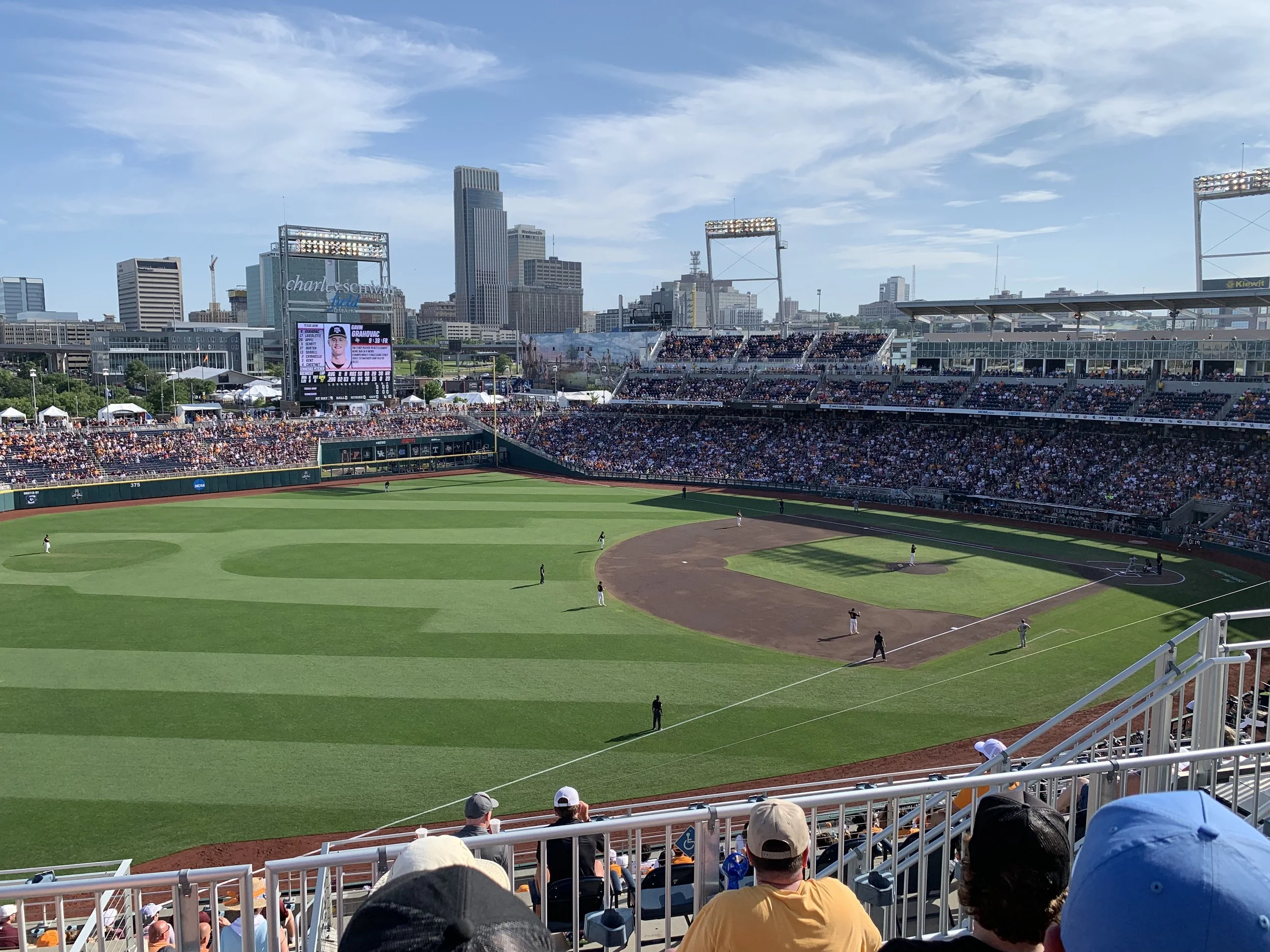
I had a weird and fun experience last night. I made a quick 24-hour trip to Omaha for a few meetings. On a quick fuel stop en route to my destination, I booked a hotel room so I would have a place to land when I got there. It's a hotel we've stayed at before. I knew what I was getting, which was good enough for me. As I pulled my car up to the main door to check in, I noticed a surprising number of people walking around wearing college gear. That's when it dawned on me, "Oh yeah, I think the College World Series is going on right now." Then it dawned on me that the CWS is immediately across the street from my hotel….Awesome! Then, after a quick Google search, I realized last night was THE final game of the tournament. Championship round, best of three games, Tennessee and Texas A&M tied 1-1. Holy cow! The final game of the CWS was taking place in mere hours, mere feet from where I was sleeping.

A view of the stadium from the front door of my hotel
Yes, I was tired. Yes, I was hoping to take it easy. Yes, I had work to do. Yes, the heat index was 112 degrees. Yes, I had an early wake-up time the next morning. But when we stumble into memories, we must seize them! I jumped into the SeatGeek app and found the cheapest ticket available ($53). Two hours later, I was watching the final game of the CWS (in which the Tennessee Vols won their first-ever national championship). Unreal!

As I always say (which is a tribute to my friend Gary Hoag), the two best investments in life are mission and memories. Sometimes, we need to intentionally create memories; other times, we stumble into them. However, we must do one thing when we stumble into them: say "yes." There were a million reasons I wanted to decline. This wasn't part of my plan. I wasn't prepared. Did I mention the heat index was 112 degrees?!?!? But that's how some of the best memories go down. My "yes" or "no" decision was the gateway to determining my fate. I ultimately said "yes," and I'm so glad I did. I experienced something I never thought I would. I wish my friends or family were with me, but it was an amazing experience.
It was a perfect combination of a little luck, a wise "yes*," and a $53 financial investment. One of the biggest bargains of my life.
I hope you're intentional about creating memories along your journey, but I also hope you say "yes" when you stumble into them as well. Oftentimes, those are the most special ones. Don’t miss those blessed opportunities to add richness to your life.
*I originally said "no" about 4 times, then almost said "no" AFTER buying my ticket, then almost said "no" mid-game (3rd, 4th, 5th, and 6th innings) due to the extreme heat and sun. But I didn't! I honored my "yes" and I was rewarded handsomely for it.
Sucker For a Vanilla Dish
If we were wise, we would take inventory of all the things we invest our money and time into and assess how much value we're receiving for the cost.
I found a new life hack. A few times per week, I get mentally stuck. Call it paralysis, brain fog, or distraction. Whatever it is, I just can't get the motor going to power through whatever tasks are on the agenda.
Whenever this happens, I hop in the convertible, drive to Sonic, and order a small vanilla dish. Then, I sit under the sun, with the car stereo playing, enjoy my ice cream, and think. No distractions, no motives, and no pressure. Just me, the sun, a delicious ice cream, a little music, and my thoughts. It sounds silly, but that's turned into such a beautiful time for me to reset my brain and process the various ideas bouncing around my head. Many of my blog ideas are born in that space.
It costs me $3 and 20 minutes of my day, a small investment for a considerable payoff. During a recent vanilla dish pilgrimage, I was thinking about how valuable certain financial and time investments can be in our lives. Not all spending is created equal. Many of our expenditures make little to no actual impact on our lives. Then, some silly $3, 20-minute investment in a mid-day Sonic run can totally move the needle.
If we were wise, we would take inventory of all the things we invest our money and time into and assess how much value we're receiving for the cost. If it's valuable, keep it. If it's not, cut it. When we do that, it's amazing how many things we'll discover are an absolute waste. Conversely, it's funny to see how many things that are seemingly ridiculous or "wasteful" are actually valuable.
What about you? What vanilla dishes exist in your life? Where do you find tremendous value in something that may otherwise be considered ridiculous or "wasteful?" Inquiring minds want to know!
5-Star Dining at a 2-Star Establishment
While I love a 5-star restaurant as much as the next person, not all meals need to be profound. Sometimes, it's just about creating memories over some simple food. The food was just that: simple. However, we had a blast together, and everyone walked out happy and full.
I hope all the dads and grandpas had a wonderful Father's Day yesterday. We made a quick trip to my parents' house for the weekend, where my dad and I spent Saturday doing body work on my new car. The car is in pretty good shape overall, but 18 years of life has provided a few scrapes and scars along its journey. Here’s an updated pick after removing the chip guard film and restoring the headlights.

We drove home yesterday morning so I could coach Finn and Pax's last soccer game of the season (and they won the league championship!). It was 90+ degrees out, so we grabbed some ice cream afterward, and then took a wonderful nap. To finish the night, we had a little Father's Day dinner out.
IHOP. Yes, IHOP. It's not my favorite place in the world, but the family was craving breakfast, and they have a kids-eat-free special. We had a great time together, and it was the perfect way to cap off a great Father's Day.
While I love a 5-star restaurant as much as the next person, not all meals need to be profound. Sometimes, it's just about creating memories over some simple food. The food was just that: simple. However, we had a blast together, and everyone walked out happy and full.
Over the years, our dining out budget has varied. During our pre-kid debt payoff years, the budget was $100/month. During our pre-kid post-debt years, the budget was at least $500/month (we had a lot of fun dining in that season!). After the twins were born, our dining out dropped to around $200/month (a few nice date nights). After I left my prior career and we took a 90% pay cut to start over, it went back down to about $100/month. Today, we're in the $250/month range.
We NEVER deviate from the budget. If we have money left, we use it. If we don't we don't. It's one of the ways Sarah and I show commitment to our budget, which we negotiate and agree upon at the beginning of each month. We don't exceed it....no exceptions. Sometimes, that sucks. Sometimes, it's frustrating to be 20 days into the month with no dining out remaining. But that's on us. That's our fault. That was our mistake; therefore, it's our burden and consequences.
That level of self-discipline changes things. It forces us to make wise decisions. If we can't bend the rules, then we must find a way to live within the rules. We can always create new rules next month, but this month's rules are this month's rules. Sometimes that means we get to eat at a Michelin-starred restaurant, and sometimes we eat at IHOP. Both are wins, by the way.
That's the beauty of setting financial guardrails in our lives. It's not something we have to do, but rather something we get to do. Once the rules are set, we have the creativity to work within them with no guilt, no regret, and no remorse. Freedom through boundaries.
The Arms Race of Materialism
We have an arms race on our hands. It's a sexy, intoxicating endeavor: the violently aggressive pursuit of more. Bigger houses, newer cars, grander trips, trendier clothes. More, more, more. The problem with more is that every time we get more, more is still more. Ironically, it's an unwinnable race.
We have an arms race on our hands. It's a sexy, intoxicating endeavor: the violently aggressive pursuit of more. Bigger houses, newer cars, grander trips, trendier clothes. More, more, more. The problem with more is that every time we get more, more is still more. Ironically, it's an unwinnable race.
I recently met with a young couple who wanted some guidance. I'll lay out the scenario. Both spouses have good jobs at well-respected companies. They live in a big house (their "forever home"), drive new vehicles, and go on extravagant trips (of which the photos get repeatedly posted on their various social media channels). They are the couple everyone else looks at with jealousy and/or inspiration. People wonder how they are so rich, and aspire to be as "successful" as them.
However, as I can attest from my coaching experience, it's not always as it seems. Often, when we pull back the curtain, a different story reveals itself. This couple has a monthly after-tax take-home income of about $10,000. Their house payment is around $3,000/month, and they have two car payments totaling $1,700/month. Yes, their house and cars alone absorb approximately 47% of their take-home income. That feels tight to me, and it feels tight to them. They are stressed, but "It's worth it. We worked hard. We deserve it." No regrets, though.
Now, the twist. The reason for our meeting was to discuss their next steps. What next steps, you ask? They want to buy a different house—their new "forever home." That's the thing about the pursuit of more. Every time we get more, more is still more. What's a "forever home" today is just another house six months from now. Anyway, after doing the math, we concluded that this new house will cost them about $4,200/month.
Are you scratching your head yet? They are stressed with their current $3,000/month house payment, but want to increase it to $4,200? Yes, correct. This begs the question, "Why?" It took a few minutes to get there, but I finally got the real answer. Their best friends are building a new house (i.e. better than theirs), making them want to upgrade, too. It's the arms race!
I tried to explain that more isn't the answer. Meaning over money. Living with purpose. Career flexibility. Not allowing financial stress to drive a wedge into their marriage behind closed doors. Nevertheless, they left that meeting with a burning desire to build their new "forever home."
It's easy to dismiss this couple as "crazy" or an anomaly, but they represent a growing contingent in this country. I meet with multiple families per week who are deeply invested in the arms race of materialism. People are enveloped in it.
While I generally do a good job leaving my work at work, some of these families keep me up at night. I'm terrified of what's coming. A reckoning will happen. Perhaps soon. Perhaps decades from now. But it's coming. I repeatedly see how this story ends, and it's a nightmare.
Are you caught caught up in the arms race? If so, maybe today is the day to finally lay down your weapons.
Note: This couple granted me permission to share their story anonymously. I'm not sure why, but I'm grateful they did.
Suffer Now or Suffer (More) Later
Can we be honest? It's hard to watch our kids learn hard lessons. To watch them suffer, hurt, and face the consequences of their actions. We love our kids, and our instinct is to protect them from pain. With that said, we have two options: watch them suffer when they are young (when we're there to help them navigate and grow), or watch them suffer in adulthood (when the stakes are higher, the consequences steeper, and we're not there to save them).
The majority of how we adults view, perceive, and handle money originated in our childhoods. Whether we like it or not, we are a product of how we were raised. I see how this dynamic has played out in my life, and I've watched it play out in hundreds of people's lives I've had the honor of walking alongside.
Can we be honest? It's hard to watch our kids learn hard lessons. To watch them suffer, hurt, and face the consequences of their actions. We love our kids, and our instinct is to protect them from pain. With that said, we have two options: watch them suffer when they are young (when we're there to help them navigate and grow), or watch them suffer in adulthood (when the stakes are higher, the consequences steeper, and we're not there to save them).
We had one such lesson yesterday. While walking around a shopping center in Branson, MO, Pax found something he really, really, really, really(!!) wanted to buy. However, he didn't have enough money to buy it. This consequence hurt him deeply. He didn't understand why we couldn't just buy it for him, and he felt it was unfair he didn't have enough money. He was livid.
Why didn't he have enough money?
First, he spent other money on things he probably shouldn't have purchased. We try to guide him on some of his purchasing decisions, but ultimately, we must let him fail in this way as well. It's important to get a taste of buyer's remorse when you're young. Kids need to learn about opportunity cost. We can't have everything. For every dollar we spend on one thing, it's one less dollar we have to spend on something else. We need to allow our kids to feel that tension and be forced to make those decisions.
Second, he had less money in the first place. He could have had much more resources, but he repeatedly turned down opportunities to earn. Projects around the house, side jobs, etc. In the moment, not working seemed like a better decision than working......until he realized he needed the money. He immediately regretted not working as much.
Those two factors culminated in a perfect moment of pain for Pax yesterday. He faced the harsh reality that he couldn't afford the one thing he really wanted. It was a fantastic hard lesson, and I was there to console and coach him through it. A few hours later, after he had a chance to think about it, he told me he should probably do more work and asked if I thought he could make enough money to buy this toy soon. "Yeah, bud. We can absolutely make that happen."
This is life. Our kids will face these same challenges for decades, except the stakes will get steeper every step of the way. Whatever their ages, help them learn hard lessons while the consequences are smaller and you're there to walk alongside them. These are some of the best gifts you'll ever give them.
Driving Value From Our Lives
After some of my recent lamenting about repeated and annoying car maintenance expenses, I had a fun conversation with a buddy. He found entertainment in my recent woes, as he and I have had a years-long back-and-forth about cars. His position, which he happily shared with me in this most recent conversation, is that it's cheaper to buy a newer and more reliable vehicle than the "beaters" I buy.
After some of my recent lamenting about repeated and annoying car maintenance expenses, I had a fun conversation with a buddy. He found entertainment in my recent woes, as he and I have had a years-long back-and-forth about cars. His position, which he happily shared with me in this most recent conversation, is that it's cheaper to buy a newer and more reliable vehicle than the "beaters" I buy. At the heart of his argument is the assertion that any money I save on buying a cheaper car is given right back through my maintenance expenses.
Today, I want to illustrate these contrasting viewpoints with a real-life comparison. We've owned Sarah's Toyota Highlander for approximately 72 months. It was seven years old when we bought it, so it's now 13 years old and has a ton of miles. We paid $15,000 for it, and its private party resale value is approximately $7,000 (according to KBB). That works out to an $8,000 erosion of value, or $111/month. On top of that, we've spent about $9,000 maintaining and fixing it (or $125/month). Adding these two numbers together, this vehicle has cost us approximately $236/month for the last six years.
Now, my friend's scenario. He originally purchased a new SUV almost six years ago. He paid $61,000 for it, and it's worth approximately $28,000 today (KBB private party value). Therefore, his vehicle cost him roughly $458/month over the last six years. This doesn't include maintenance; he said there hasn't been any (not sure I believe that).
Even though we've spent around $9,000 to fix and maintain our vehicle over the years, it cost us roughly half of what it cost him. This $222/month discrepancy equals a $16,000 difference over the six-year period. However, there's also one major component missing here. I can save up and write a $15,000 check to buy a vehicle, but the only way for him to acquire a $61,000 vehicle is to finance it. His $458/month cost doesn't include maintenance OR interest from his loan payments. And it's a big loan! That's opportunity cost. Every month, he's eating those payments instead of using that money for something more meaningful.
The X-factor in all of this is depreciation. Generally speaking, vehicles lose roughly 15% of their value each year. He will lose 15% and I'll lose 15%, but not all 15% losses are created equal. When he purchased his vehicle, he was losing 15% of $61,000 ($9,100 loss in year 1) and I was losing 15% of $15,000 ($2,300 loss in year 1). Those losses add up over time! In the same six-year span, I lost $8,000 of value and he lost $33,000.
Yeah, I've been hit with a bunch of car maintenance expenses recently. But we need to zoom out and see the bigger picture. He lost as much value in his "reliable" vehicle in year 1 as I've spent on maintenance in six years. It's simple math, but it's powerful....and it changes everything.
Cars are important, but they shouldn't impair or impede other aspects of life that are far more meaningful.
Plug the Leaks
It's interesting how our instinct is often to cut back on the most prominent (and important) things in our lives. These families aren't alone! We all do it to some extent. I suspect one of the reasons we do this is because those prominent things are front and center; they are obvious.
"We need to stop spending so much on dining out."
"We need to cut back on travel."
"We need to quit going to games."
These are three comments made to me in the past few weeks. They are from three separate clients, each with their own financial tensions. Things feel tight. There's not enough margin to keep the train on the track, never mind make financial progress. Their natural inclination is to cut back, which is fair. However, I think they are sniffing up the wrong tree.
The first family's love language is food. Going out to eat is one of their biggest bucket-fillers.
The second family's passion is travel. It's their #1 priority, and it fuels them.
The third family are avid sports fans. Watching their teams play is one of their unifying and family-centric hobbies.
It's interesting how our instinct is often to cut back on the most prominent (and important) things in our lives. These families aren't alone! We all do it to some extent. I suspect one of the reasons we do this is because those prominent things are front and center; they are obvious.
Here's what I think. I think it's prudent for these three families to cut back. However, I think cutting back on these suggested categories would be counter-productive and possibly detrimental. Instead, I recommend they find the leaks.....and plug them. Oh, there are always leaks! They have them, you have them, and I have them. Expenses (big or small) that are either redundant or fail to add value to our lives.
A subscription for a streaming service that we don't watch.
A membership for a gym we don't even use.
Extra product that we won't use or will ultimately go bad.
A loan payment (plus insurance, maintenance, etc.) for a vehicle rarely driven.
Instead of indiscriminately cutting some of these families' most valuable expenditures, we looked for leaks. Here's what we found: One family found $300 of monthly leakage, another found $650, and the third found $1,700!!!
With very little effort, these families were able to recoup this cashflow in their monthly budget, which reduced their financial tension. It also prevented them from having to cut back on the things they value most. Huge wins!
Plugging the leaks is so powerful! Maybe you have some leaks. I suspect you do. I challenge you to find them, plug them, and use that found money for things that truly add value to your life!
So Ridiculous That It’s Perfect
I just received the most random message from a friend. She shared that her partner just purchased her the most ridiculous Mother's Day gift ever imagined. She is correct. I can, in fact, confirm it's the most outlandish gift I've ever witnessed.
I just received the most random message from a friend. She shared that her partner just purchased her the most ridiculous Mother's Day gift ever imagined. She is correct. I can, in fact, confirm it's the most outlandish gift I've ever witnessed. In her message was a tongue-in-cheek question about whether this gift was a "smart financial decision."
Of course this purchase wasn't a smart financial decision. After all, it's peak ridiculous. The obvious answer to her question is, "No," this wasn't a good financial decision. It was an absolute waste of money. It was foolish. It was irresponsible. It was non-sensical. .......
.......It was perfect! Through the lens of investing in mission and memories, he hit the nail on the head with this gift. Yes, it was ridiculous. So much so that she took time out of her day to message me about it. It's truly the most ridiculous thing I've ever seen. Yet, it was perfect. Here was my message to her:
"This is a brilliant move. The two most important things to invest in are mission and memories. And something tells me you will remember this forever. Amazing investment!"
This is why it's so important to stop obsessing about needs vs. wants. Instead, we should look through the lens of value and meaning. Does it add value? If so, it's probably a worthwhile purchase. Does it provide meaning? If so, it's probably a worthwhile purchase. Mission and memories usually fit the bill. Value, value, value. Meaning, meaning, meaning.
Yes, my friend received the most ridiculous gift ever created. Yes, it was perfect. She will remember it forever. Heck, I may remember it forever. Do something outlandish today. Be wasteful. Be irresponsible. Make a decision that makes you scratch your head. Do something that makes other people roll their eyes. Get labeled as the weirdo. But for heaven's sake, invest in mission and memories. You won't regret it, and neither will those in your orbit.
Happy Mother's Day!
Stepping Over Quarters
This is a perfect example of how a scarcity mindset can cost us. In an effort to save a few bucks, we inadvertently cost ourselves far more than we were trying to save in the first place.
During a recent conversation with a friend, he began sharing about how prudent and wise he is with his money. I didn't solicit this information, but these types of conversations tend to come my way. Anyway, he shared several examples of how he saves money through his various day-to-day decisions. Like this one: "I save $3 in tolls every day by taking the non-toll roads to work." $3 per day works out to roughly $60 saved per month. On the surface, that would appear to indeed be a prudent move.
Then, I asked a follow-up question: "How much longer is your commute this way than if you just pay the tolls?" His response: 20 minutes per day.
My next question: "How much do you make at your job?" His response: I bill at $65/hour.
I explained that he is effectively making $9/hour by not taking toll roads, but giving up $65/hour of billable work time in exchange. In other words, for every day he saves $3 by taking the longer commute, he costs himself $21.67 of revenue. That $18.67/day difference equates to a $373 worse outcome over a four-week stretch! That's more than $4,800/year he's losing out on!!!!!
"Yeah, but I save $3 every single day!"
This is a perfect example of how a scarcity mindset can cost us. In an effort to save a few bucks, we inadvertently cost ourselves far more than we were trying to save in the first place. Or as the expression goes, stepping over quarters to pick up nickels.
Whenever we make financial or life decisions, we have to weigh both sides of the equation. For every benefit there's a cost, and for every cost there's a benefit. When we focus on just one side, we'll make poor decisions. I guarantee you're doing it right now. Heck, I guarantee I'm doing it right now.
As I've discussed at length on this blog and the podcast, cost isn't the metric we should dwell on. Rather, we should aim to understand the value we're getting for the cost. Some cheap things are expensive, and some expensive things are cheap. It's our job to assess it through our own unique lens, and make whatever decision is best for us.
I texted my friend yesterday morning. He took the toll road.
Putting the Pieces Together
What does it mean to win with money? I could ask 20 people and get 20 different answers. We all view it through a different lens. We each possess different skills, and we each have our shortcomings.
What does it mean to win with money? I could ask 20 people and get 20 different answers. We all view it through a different lens. We each possess different skills, and we each have our shortcomings. Some things we'll get right, and other things may be more of a challenge. We don't have to nail every aspect, but it's important to remove any glaring deficiencies. Most families thrive in some areas and struggle in others.
However, I recently met with a couple who inspired me to write about this topic. I've worked with this couple for over a year, but this meeting was particularly inspiring. They are a younger-ish couple, both teachers. In my mind, they've cracked the code on personal finance. No, they aren't geniuses in any one area, but they are doing good in pretty much every area. I'll summarize:
They have unity, a shared vision, and joint ownership of their finances.
They budget intentionally each month, leaning into their unique values.
They have an emergency fund to protect them for WHEN life punches.
They spend money on wants that add value to their life.
They utilize sinking funds to save for future purchases/expenses.
They give joyfully and sacrificially.
They paid off all their non-mortgage debt.
They invest with discipline, simplicity, and effectiveness.
They have cheap term life insurance policies that will replicate each person's respective income in the event of a tragic event.
They are in the process of setting up wills.
They both pursue work that matters, and find meaning and fulfillment in their careers.
They are creating financial margin to provide flexibility for future decisions and lifestyle shifts.
They are the total package! No, it's not because they have massive incomes and unlimited resources. Reminder, they are both teachers. They are normal people, making normal money, living a normal life. Except it's not a normal life. It's an extraordinary life.
What's their secret? Intentionality, discipline, humility, contentment, and consistency. That's it. Good choice after good choice after good choice. Oh yeah, and that whole unity, shared vision, and joint ownership thing. They are doing it together. There is no "mine" and "yours." Everything is "ours." For better or worse.
Yes, this is an opportunity for me to brag about this amazing couple. However, there's more to it. I hope you find encouragement in it. We ALL have the power to get better in the areas of money. The only thing stopping us is us. It's not easy, but it's so, so worth it. Get 1% better today! Then, get 1% better tomorrow. One day at a time. You got this!
The Phase We Never Outgrow
That's the power of needs. Needs compel us to act. Needs incentivize us to hurry. Needs encourage us to throw common sense out the window. Needs must be met, and meet them we shall.
Every night, I ask the kids what they learned at school. I wish I could tell you I always get productive answers, but I don't. As Forrest Gump says, it's like a box of chocolates: I never know what I'm going to get. Recently, though, Finn dropped some gold on me. Here was his answer to my question:
"We did needs and wants, and I got a LOT of wants!"
Join the club, Finn! His teacher jokingly pointed out that most kids had a lot of wants and struggled to draw a proper line between what's a need and what's a want. I guess it's the phase we never outgrow.
This is one of the biggest challenges for young and old alike. We have LOTS of wants, and the line is blurred between what's a need and what's a want.
Today, I want to settle on that last part—the blurred line between needs and wants. This isn't a first-grader problem; it's a human problem. And the problem is that it's often not intentional. There's a psychological game at play where we subconsciously shift something from a want to a need to justify its existence.
To exhibit this concept, I'll list what people have told me are "needs." I'm not condemning these purchases; instead, I'm questioning whether it's a need. I'll let you decide for yourself. Without further ado, here's a list of "needs" from people I've conversed with:
$10,000 for a next-gen TV
A $75,000 basement remodel project
$2,500/month for dining out
$2,000/month for clothing
A brand new Tesla
Monthly botox injections
Country club membership
A lake house (2nd home)
A speedboat
Each of these was firmly thrust into the need camp. And do you know what we do if something is a need? We purchase it by any means necessary. That's the power of a need.
If I need to put food on the table, I'll go to extreme lengths to make it happen (including going into debt if that's the difference between eating or being hungry).
If I need a $40,000 speedboat, I'll go to extreme lengths to make it happen (including going into debt if that's the difference between my hair blowing in the wind and being a loser sitting on the shore watching the boats go by).
That's the power of needs. Needs compel us to act. Needs incentivize us to hurry. Needs encourage us to throw common sense out the window. Needs must be met, and meet them we shall.
One of my roles as a parent will be to help my kids successfully manage the tension between needs and wants. However, I'll simultaneously be working on that myself. It's the phase we never outgrow.
Pondering Things About Things
I have a Notes file on my phone called "Blog." Its purpose is simple. As I go about my day, anything and everything that inspires or triggers me gets jotted into this file. There are hundreds of ideas, just waiting to be turned into a blog or a podcast. While browsing my random notes this morning, one line stood out. It's a quote that reads, "The more things we have, the more time we spend on things." To be perfectly honest, I have zero recall about where I heard this or who said it. But it smacks!
When I reflect on my life and the decisions I've made, I can't help but think how true this quote is. I'm not going to share any of my specific examples, as I want you to use your imagination and consider your own past decisions. Let me set the table. You just purchased a nice thing. You traded your hard-earned money for this thing. It has value, and you want to protect this value. Therefore, you're going to spend time and attention ensuring this thing remains safe and well taken care of.
Also, if it's a cool or fun thing, it's going to perpetually occupy space in your mind. Depending on what type of thing it is, you may also carve time out of your days to use and/or enjoy said thing.
You'll maybe need to invest more time and money to maintain and care for it. You also need space to store it. Whether big or small, things take up some volume of space. Big things obviously take up more space, but never underestimate the compounding space needs of many small things. This may cause you to want/need a bigger residence, which creates an entirely new level of time and financial consumption.
On a related note, your things may also inhibit your ability to travel or live with flexibility. You might get nervous to leave your things, or your things make you too comfortable to want to leave. Therefore, things can act as an invisible anchor, locking us into place. Worse, your desire to keep your things (and accumulate more of them) may require you to remain in a job that we tolerate at best, and despise at worst. The item may be the gateway drug to the next item, and the process repeats.
"The more things we have, the more time we spend on things." I don't know if I'm thinking through this correctly, but this is how I'm processing it today. Things can have a scary pull on our lives, and our souls. I've fallen into that trap more times than I'd like to admit. I can be better. I want to be better. I need to be better. Though I can't prove it, I believe, to my core, that relinquishing our emotional ties to things (and the power they have over us) is one of the paths to a meaningful life. Or, in the simpler and wiser words of my friend Gary Hoag, just "Invest in mission and memories."